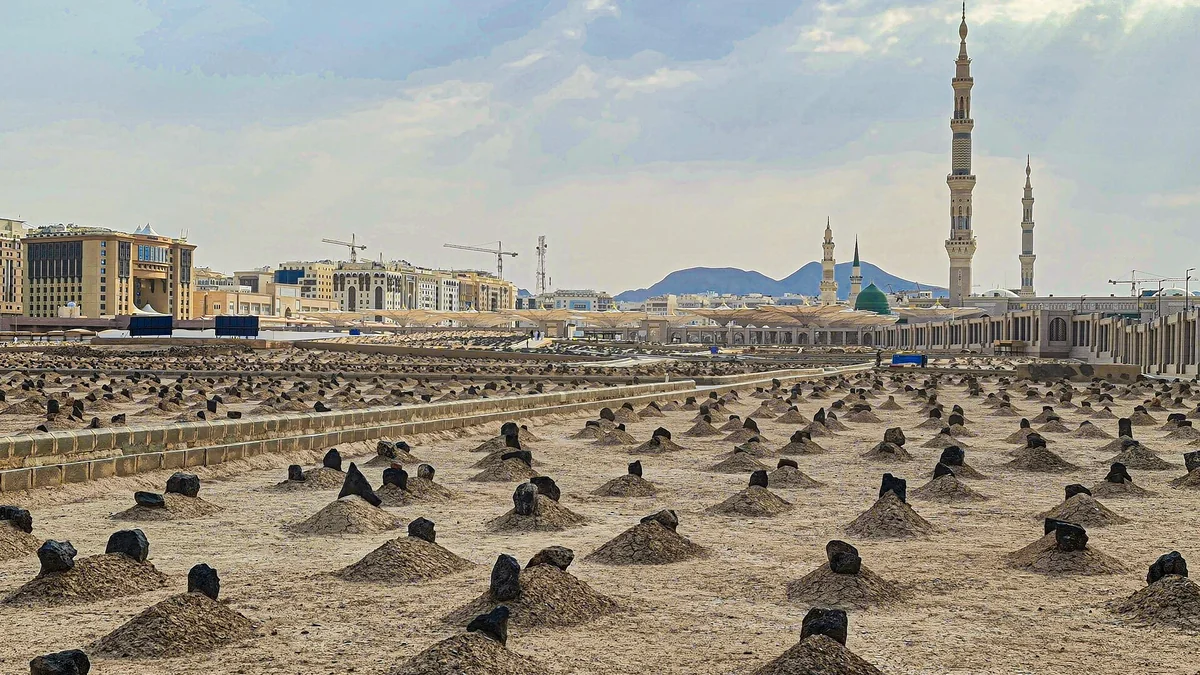
Jannat al-Baqi, also called Baqi’ al-Gharqad, is the main cemetery of Madinah, beside the south-eastern side of the Prophet’s Mosque. Many of the Prophet’s ﷺ family and Companions are buried there, and he would go out to al-Baqi’ at night to pray for its people.
This guide explains where al-Baqi’ is, who is buried there, the Sunnah of visiting graves, what to say when you visit, and the scholars’ views on women visiting.
Key takeaways
- Where: beside the south-eastern wall of the Prophet’s Mosque, covering about 180,000 m².
- Who: the Mothers of the Believers (except Khadijah and Maymunah), the Prophet’s ﷺ daughters, his son Ibrahim and many Companions.
- What to say: the greeting the Prophet ﷺ taught for visiting graves (Sahih Muslim 975).
- Women: scholars differ; the main views are set out below, without a ruling.
Where is Jannat al-Baqi?
Jannat al-Baqi lies right beside the south-eastern wall of the Prophet’s Mosque in Madinah. Saudipedia describes it as the city’s largest and oldest cemetery, used for burials since the time of the Prophet ﷺ, and it now covers about 180,000 m² (Saudipedia).
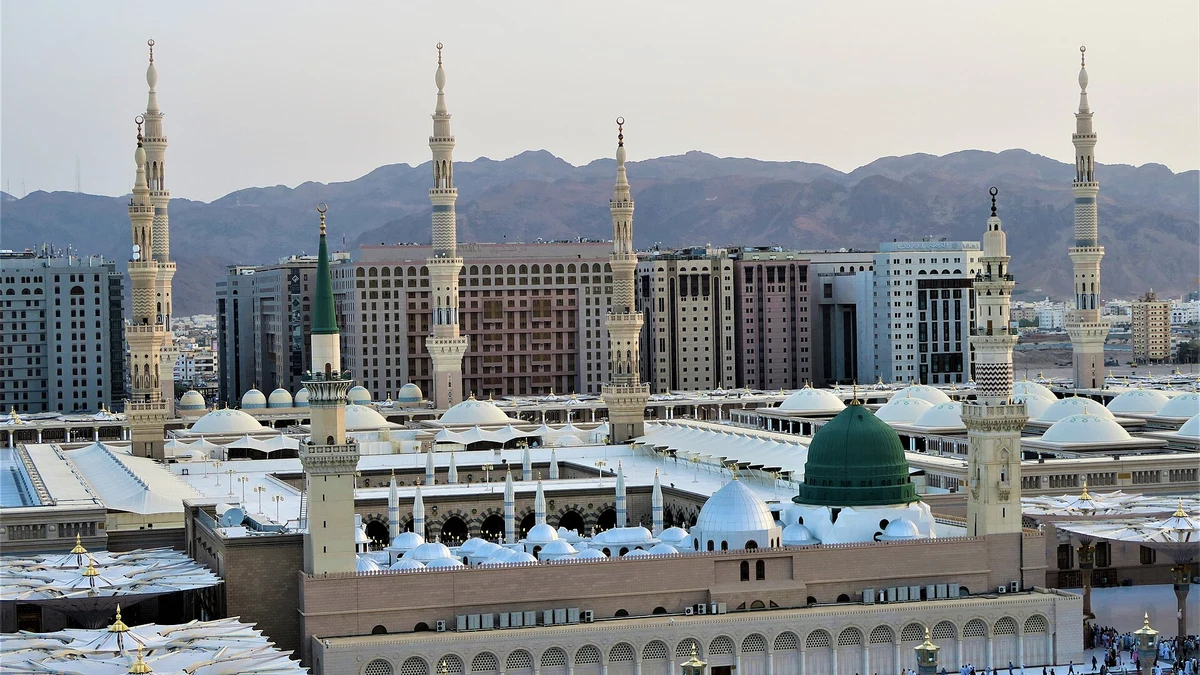
Its old name, Baqi’ al-Gharqad, comes from the gharqad (nitre) bushes that once grew there. Al-Baqi’ was a burial ground even before Islam, when the people of Yathrib buried their dead in it (Saudipedia).
Homes and schools of the al-Aghawat neighbourhood once stood between the cemetery and the mosque. Since the King Fahd expansion, the cemetery borders the courtyards of Masjid Nabawi with nothing in between. The Jannat al-Baqi cemetery is still in use: people of Madinah, and visitors who die in the city, are buried there.
Who is buried in Jannat al-Baqi?
Many of the Prophet’s ﷺ family and Companions are buried in al-Baqi’, among them his wives, his daughters, his son Ibrahim and the third caliph, Uthman ibn Affan. Saudipedia names these graves (Saudipedia):
- the Mothers of the Believers, the wives of the Prophet ﷺ, except Khadijah bint Khuwaylid and Maymunah bint al-Harith;
- his daughters and his son Ibrahim;
- his uncle al-Abbas and his aunt Safiyyah;
- his grandson al-Hasan ibn Ali;
- Uthman ibn Affan, the third of the Rightly Guided Caliphs.
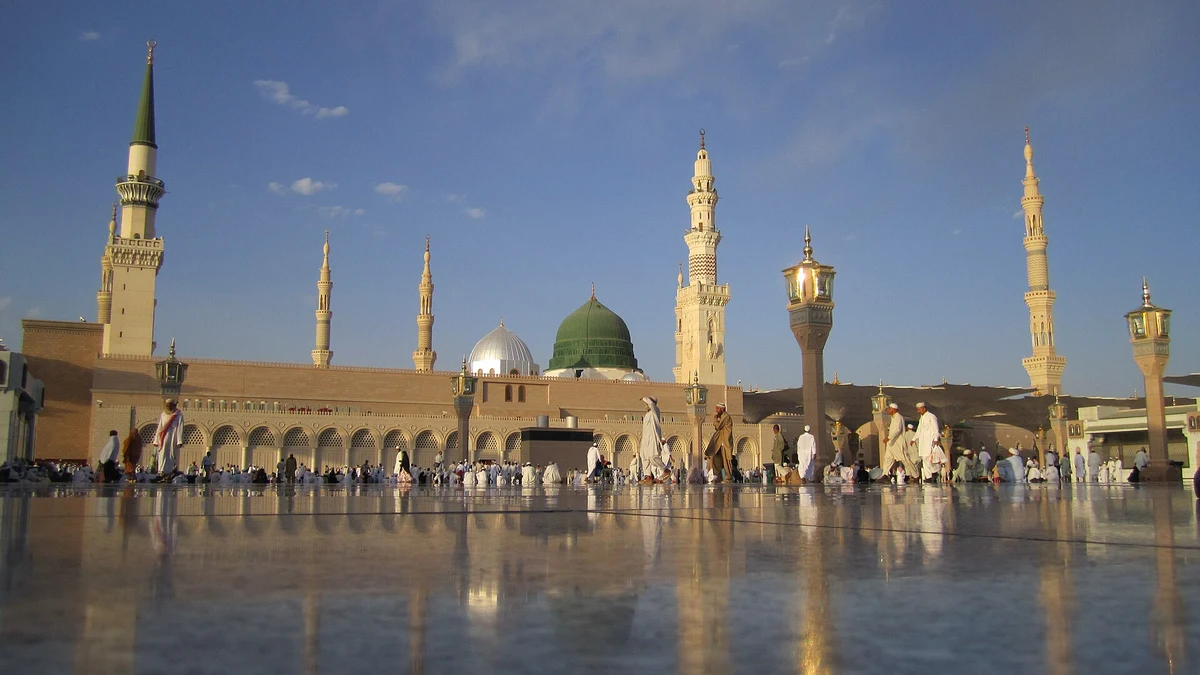
Another Saudipedia page adds that “it is narrated” ten thousand Companions were buried there, alongside thousands of the people of Madinah over the centuries (Saudipedia).
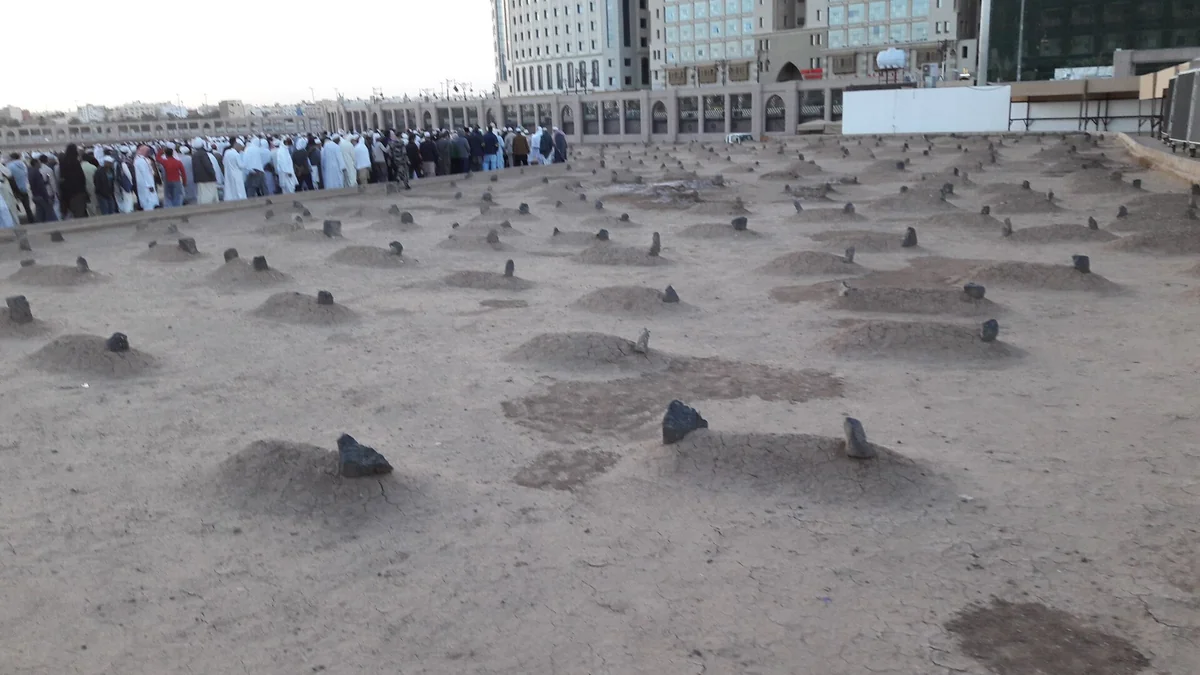
The graves are kept simple, and this guide does not try to point out individual ones. When you visit, greet everyone buried there and make dua for them together.
The Sunnah of visiting graves
For men, visiting graves is a Sunnah (IslamQA). The Prophet ﷺ first forbade it and then allowed it: “I forbade you to visit graves, but you may now visit them” (Sahih Muslim 977).
He also gave the reason. Abu Hurairah reported that the Prophet ﷺ visited his mother’s grave, wept, and said: “visit the graves, for that makes you mindful of death” (Sahih Muslim 976b). Another narration says: “visit them, for they will remind you of the Hereafter” (Jami’ at-Tirmidhi 1054, graded Sahih by Darussalam).
A version reported by al-Hakim, quoted by IslamQA, adds that such visits soften the heart and bring tears to the eyes.
Al-Baqi’ was part of his own routine. Aisha reported that on the nights he spent with her, he would go out towards the end of the night to al-Baqi’, greet its people and say: “O Allah, grant forgiveness to the inhabitants of Baqi’ al-Gharqad” (Sahih Muslim 974a).
So visiting al-Baqi’ is one of the visits prescribed in Madinah, with the martyrs of Uhud and Masjid Quba. IslamQA explains that you make these visits while you are in the city, not as a journey of their own. Our guide to places to visit in Madinah covers the others.
What to say when you visit al-Baqi
For a Jannat al-Baqi dua, use the words the Prophet ﷺ taught his Companions for going out to a graveyard. Buraidah reported them:
السَّلاَمُ عَلَيْكُمْ أَهْلَ الدِّيَارِ مِنَ الْمُؤْمِنِينَ وَالْمُسْلِمِينَ وَإِنَّا إِنْ شَاءَ اللَّهُ لَلَاحِقُونَ أَسْأَلُ اللَّهَ لَنَا وَلَكُمْ الْعَافِيَةَ
Transliteration: As-salamu ‘alaykum ahlad-diyari minal-mu’minina wal-muslimin, wa inna in sha’ Allahu la-lahiqun. As’alullaha lana wa lakumul-‘afiyah.
Meaning: “Peace be upon you, the inhabitants of the city, among the believers, and Muslims, and God willing we shall join you. I beg of Allah peace for us and for you.”
Reference: Sahih Muslim 975.
Keep these points of etiquette in mind:
- Keep your voice low and walk only on the paths.
- Make dua for those buried there and ask Allah to forgive them; never ask anything of the dead.
- Follow the guidance of the staff on site, including which gates are open and when.
You can also use the words from Aisha’s report: “Peace be upon you, abode of a people who are believers”, followed by a dua for forgiveness for the people of al-Baqi’ (Sahih Muslim 974a).
Can women visit Jannat al-Baqi?
Scholars differ on whether women may visit graves, and this guide does not give a ruling. IslamQA sets out three views: that it is allowed, as it is for men; that it is makrooh (disliked), which it gives as the view of the majority of scholars; and that it is forbidden, the view that answer itself prefers.
A second IslamQA answer also holds that women should not visit graves (IslamQA 8198). On the other side, a Hanafi answer on islamqa.org quotes Ibn ‘Abidin, who held that “the dispensation (rukhsa) for the visitation of graves is firmly established for women” (islamqa.org).
Follow the scholars you trust and the arrangements on site, which decide who may enter and when. Whatever view you follow, you can make dua for the people of al-Baqi’ from anywhere, including the Prophet’s Mosque next door.
Questions about Jannat al-Baqi
What does al-Baqi mean?
Al-Baqi’ is the cemetery’s name. Its full old name is Baqi’ al-Gharqad, after the gharqad (nitre) bushes that once grew there (Saudipedia). Jannat is the Arabic word for garden, and many Muslims add it to the name.
Can women visit Jannat al-Baqi?
Scholars differ. IslamQA sets out three views, allowed, makrooh (the majority) and forbidden, and prefers the last; a Hanafi answer quoting Ibn ‘Abidin holds that the dispensation for women is established. Follow your scholars and the arrangements on site.
What dua do I say at al-Baqi?
Say the greeting from Sahih Muslim 975, which begins “As-salamu ‘alaykum ahlad-diyari minal-mu’minina wal-muslimin”. It greets the believers buried there, says that we will join them, God willing, and asks Allah for well-being for us and for them.
Is visiting al-Baqi Sunnah?
Yes, for men. The Prophet ﷺ went to al-Baqi’ and prayed for its people (Sahih Muslim 974a), and IslamQA counts it among the visits prescribed in Madinah. For women, see the scholars’ views above.
Is a visit included in your packages?
Yes. Babul Haram Travels includes guided ziyarat in its Umrah packages, and your written quote lists the sites it covers. Every package also has a group guide or scholar who helps with the rites.
Your next step
Jannat al-Baqi lies next to the mosque where you pray each day in Madinah. Visit it in the spirit of the Sunnah: quietly, with the greeting the Prophet ﷺ taught, and with dua for those buried there.
Planning your Umrah from the UK? Send us your dates and ask for a written quote on WhatsApp, with flights, hotels, visa, transfers and ziyarat listed separately, or compare our Umrah packages first.
Reviewed by Babul Haram Travels team · editorial review 27 November 2026. Official pages checked on 27 November 2026. For a personal religious ruling, consult a qualified scholar.
Hadith from Sahih Muslim carry no separate grade on sunnah.com; the other hadith show the grade given there.
Photo sources: Location photographs are credited under each image and do not show our customers. Featured photo: the al-Baqi’ cemetery and the Prophet’s Mosque (photographed 2021), resized and cropped; photo by Saleh Al Hussain, CC BY 4.0.