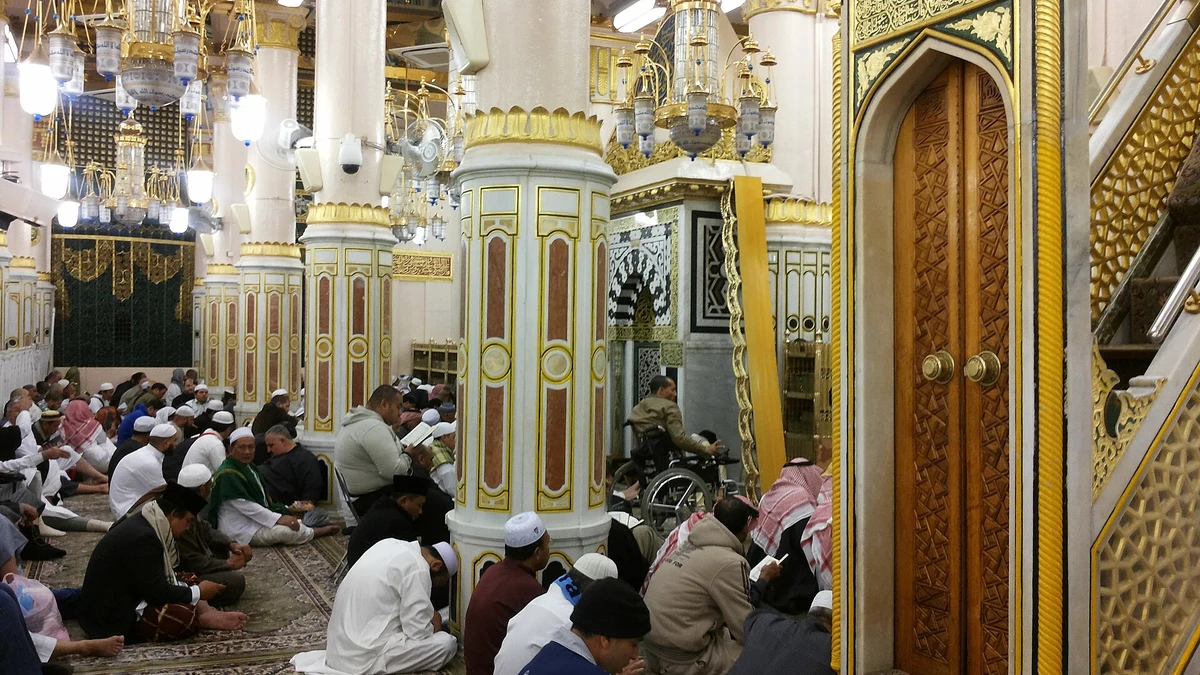
The Rawdah is the area of the Prophet’s Mosque in Madinah between his blessed chamber and his pulpit. The Prophet ﷺ described it as a garden from the gardens of Paradise, and praying there is among the most sought-after moments of any journey to Madinah.
Access is now managed by permit through the official Nusuk platform, with separate times and gates for men and women. This guide explains what the Rawdah is, how to book a permit, when slots open, what to expect inside, the etiquette that keeps the area moving, and the mistakes that cost UK pilgrims their booking.
Permit arrangements are reviewed regularly, so treat every timing in this article as a starting point and confirm the current position on Nusuk for your own travel dates.
The Rawdah at a glance
Here is the orientation most pilgrims need, with the detail behind each row following below.
| Question | Answer |
|---|---|
| What is the Rawdah | The area between the Prophet’s chamber and his pulpit in Masjid an-Nabawi |
| Why it matters | Described in authentic narrations as a garden from the gardens of Paradise |
| How to identify it | Between the chamber and minbar; follow current signs and staff |
| Permit required | Yes, for men and women, booked through the Nusuk platform |
| Permit cost | Free of charge |
| When slots open | Released on a rolling basis; check the app daily before your visit |
| Time inside | Usually only a few minutes, with continuous managed movement |
| Photography | Not permitted in the Rawdah area |
A permit is not a paid guarantee. Use the official Nusuk booking service for the Rawdah. A charge for travel assistance or a package must be distinguished from the permit itself; paying a third party does not override official eligibility or availability.
No Rawdah Slot? Choose the Right Next Step
| What you see | What to check next | What not to assume |
|---|---|---|
| An empty calendar without an error | Your Madinah dates, the selected visitor and availability again later | That a particular minute after Fajr, midnight or Friday guarantees a release |
| A message about previous visits or eligibility | The ordinary annual limit and the exact message in the current app | That changing phones or creating another account removes the rule |
| You are near the Prophet’s Mosque and see an immediate-track option | The location, eligibility and availability conditions shown for that service | That it is a guaranteed repeat visit or can be reserved from the UK |
| A family member is not included | Companion management and a valid booking for each eligible traveller | That one adult’s permit covers every child or accompanying adult |
| You cannot attend, or the appointment has passed | Cancellation or amendment options in your booking and official support if needed | That a missed slot automatically resets eligibility or that an old QR code still works |
The official Rawdah guidance, checked on 19 September 2026, describes ordinary annual access, an immediate-track exception near the mosque, companion management and arrival 30 minutes early. The app’s current booking conditions decide your individual case.
On the day: check the traveller’s name, date, time, entry route and current code before leaving the hotel. Keep appointment details offline as a reference, but do not rely on a screenshot to replace a code that the service requires to be refreshed.
What is the Rawdah?
The Rawdah is the area between the Prophet’s chamber and his minbar inside Masjid an-Nabawi. Identify it through current signs and staff directions, not carpet colour alone: furnishings and visitor routes can change. The official Nusuk Rawdah page describes the location and booking arrangements.
What the Prophet ﷺ said about it
The narration that gives the Rawdah its standing is recorded in Sahih al-Bukhari 1196, where the Prophet ﷺ said that what lies between his house and his pulpit is a garden from the gardens of Paradise. The same report appears in Sahih Muslim 1390.
Where exactly is it?
It occupies the space between the Prophet’s blessed chamber, which contains his grave, and the minbar from which he delivered sermons. It is a modest area, which is precisely why access has to be managed when millions of visitors arrive each year.
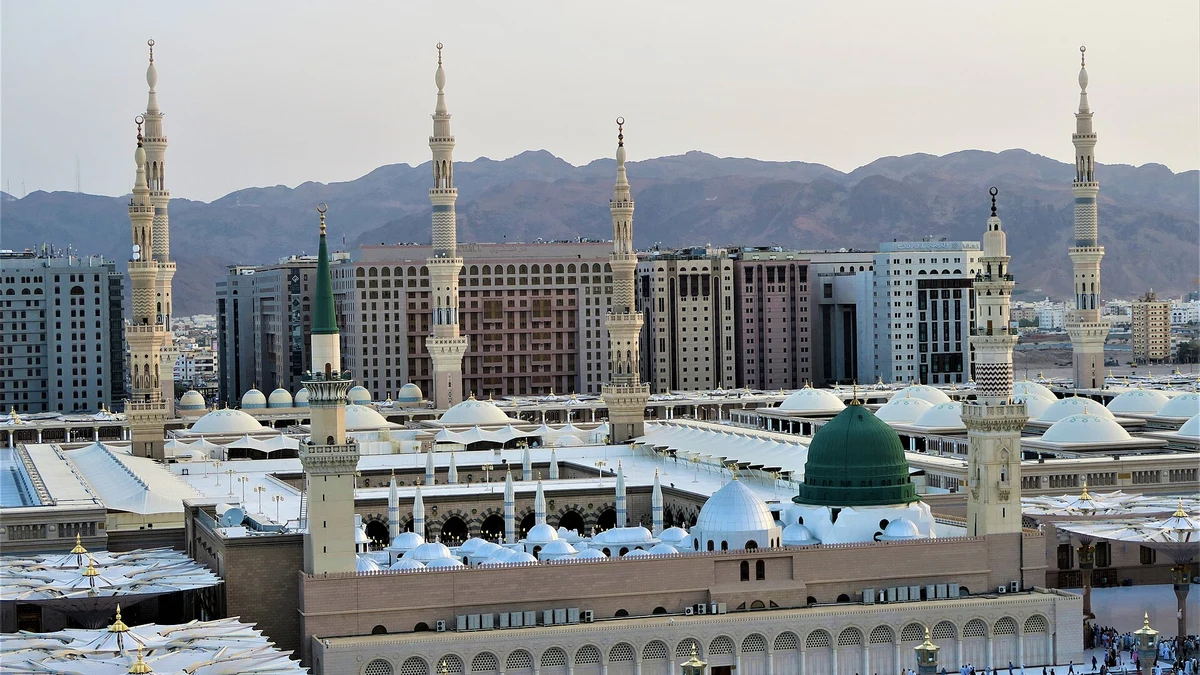
Follow the marked visitor route. The green dome covers the chamber area; it is not a boundary marker for the whole Rawdah. Use the official description, current signs and stewards rather than treating a photograph or carpet colour as a map.
Why scholars discuss it so often
Because of its virtue, questions naturally arise about how to visit properly, what may be asked there, and what practices are established. Reliable answers come from qualified scholars rather than from crowd behaviour, and it is worth reading before you travel rather than deciding in the moment.
The history of the Rawdah
Understanding how this small area came to sit inside an enormous mosque explains a great deal about the permit system.
The mosque the Prophet ﷺ built
When the Prophet ﷺ arrived in Madinah he built a simple mosque with a courtyard, adjoining rooms for his family, and a raised place from which to address people. The Rawdah is the ground between two of those original features: his living quarters and his minbar.
How the mosque grew around it
Successive expansions over fourteen centuries enlarged the mosque enormously, but the Rawdah itself did not grow. It remains the same modest patch of ground it always was, now surrounded by a building that accommodates hundreds of thousands of worshippers.
That is the whole reason access must be managed. A fixed, small area inside a mosque serving millions annually cannot be left to chance without people being hurt.
Perspective helps. The permit system can feel restrictive until you picture the arithmetic: a space the size of a large room, and a queue that stretches across continents. The permit is what makes your few minutes possible at all.
Sending salutations upon the Prophet ﷺ
Many pilgrims are unsure what to say when they reach the chamber, and the answer is simpler than they expect.
The command in the Quran
Sending blessings upon the Prophet ﷺ is commanded in Quran 33:56, which states that Allah and His angels send blessings upon him and instructs the believers to do the same.
What to say
A simple, quiet greeting of peace upon the Prophet ﷺ is sufficient. The reward for sending blessings is described in Sahih Muslim 408, where the Prophet ﷺ said that whoever sends one blessing upon him, Allah sends ten upon that person.
There is no long prescribed formula that must be recited at the chamber, and no need to raise the voice. Greetings are conveyed to him, as reported in Sunan Abi Dawud 2041.
Keep it brief and quiet. Stewards move people past the chamber steadily. A short, sincere greeting said quietly fulfils the purpose entirely; a long recitation while a queue waits behind you does not improve it.
Do you need a permit for the Rawdah?
Yes. Visiting the Rawdah requires a permit booked in advance through Nusuk. This applies to Umrah pilgrims, Hajj pilgrims and ordinary visitors alike.
The permit system was introduced to manage crowding in a very small space. Before it existed, access depended largely on physical persistence, which was neither safe nor equitable. The permit replaced that with allocated time slots.
Official pilgrim services, including permits for the Rawdah, are published by the Saudi authorities through Nusuk, with wider guidance available from the Ministry of Hajj and Umrah. Those are the two references to trust over anything circulating on social media.
A permit is not the same as your visa. Entry permission to Saudi Arabia and a Rawdah permit are two separate things booked in two separate places. Our guide to the Umrah visa from the UK covers the entry side.
How to book a Rawdah permit
The process runs through the Nusuk app and is straightforward once your account is verified.
| Step | What you do | Why it matters |
|---|---|---|
| 1. Verify Nusuk | Set up before you fly | Resolve any account errors before departure |
| 2. Watch for slots | Check the app daily | Slots release gradually |
| 3. Select the Rawdah | Choose Madinah, then the visit | It is a separate service |
| 4. Save the permit | Save appointment details and check the current entry code | Signal inside is unreliable |
| 5. Find your gate | Locate it the day before | Follow your current permit and official entry directions |
| 6. Arrive early | 30 minutes, per current Nusuk guidance | Queues form before the slot time |
Set up Nusuk before you fly
Install the app and complete verification while you are still in the UK. Your details must match your passport exactly.
Resolve identity or account errors before travel where possible, without assuming a fixed verification delay for every visitor. Begin at the official Nusuk website and follow its app-store links. Use the account category that matches your documents.
Select the Rawdah service
Within the app, choose Madinah, then the Prophet’s Mosque, then the Rawdah visit. Available slots are displayed with times, and you select one that fits your itinerary.
Check the current entry code
Save appointment details for reference, but check when the app releases the code needed for entry and whether you must confirm attendance. A screenshot may preserve a time or reference, but it is not a substitute for a current code. Keep the phone charged and plan a working connection.
Keep both a backup and the live booking. Save the date, time and instructions, then confirm the current booking screen before setting out. Follow any code or attendance requirements shown for your appointment.
How often can you book?
As checked on 19 September 2026, Nusuk’s guidance describes an ordinary Rawdah visit once per year, with an exception through its immediate-track service. That option depends on the app’s eligibility and availability near the mosque. It is not a guaranteed second visit for every traveller.
When do Rawdah slots open?
Availability can change, but the official page checked for this guide does not establish a universal weekly or hourly release timetable. Treat timings shared in comments and group chats as observations, not a rule that will work for your account.
Check daily as your dates approach
Rather than checking once and concluding nothing is available, check each day in the period before your stay. New slots appear as the system releases them and as other visitors cancel.
Book as soon as your dates are fixed
The moment your Madinah dates are confirmed, start looking. Demand is heaviest in Ramadan and during the winter school holidays, which are also the busiest UK travel periods.
Do not panic if slots look full. Availability genuinely does reappear. Cancellations release slots back into the system, so keep checking through the day rather than giving up after one attempt.
Rawdah timings for men and women
Men and women visit at different times and enter through different gates. This is a practical arrangement for a small space, not a difference in the virtue of the visit.
Men
Men’s slots have generally been spread widely across the day and night, including overnight periods that are considerably quieter than the hours around the obligatory prayers.
Women
Women’s access is typically concentrated into set periods each day, with gates and waiting areas assigned separately. Because the windows are narrower, booking early matters even more.
| Aspect | Men | Women |
|---|---|---|
| Permit needed | Yes, through Nusuk | Yes, through Nusuk |
| Cost | Free | Free |
| Typical availability | Spread widely across day and night | Concentrated into set daily periods |
| Overnight slots | Commonly available and quieter | Less commonly available |
| Entry gates | Assigned to the slot | Separate assigned gates |
| Booking urgency | Book early in peak seasons | Book as early as possible, windows are narrower |
| Time inside | A few minutes, managed flow | A few minutes, managed flow |
Timings change, so verify yours. Published schedules are adjusted seasonally and around Ramadan and Hajj. Confirm the arrangement for your specific dates in the Nusuk app rather than relying on any article.
What to expect inside the Rawdah
Pilgrims are often surprised by how brief and how managed the visit is, and knowing that in advance makes it far better.
The movement is continuous
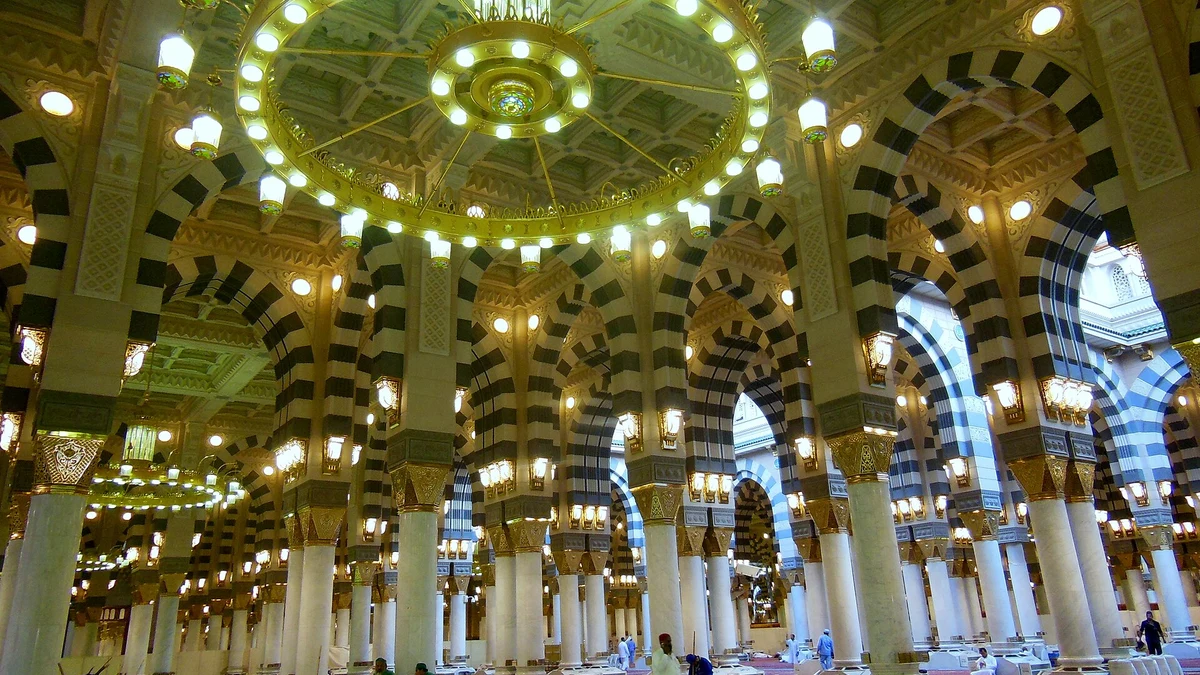
Groups are admitted in batches and move through in a steady flow. Stewards direct people forward. You will not have an extended private moment, and expecting one leads to disappointment.
The stewards are managing a continuous crowd in a confined space and are generally patient with people who follow directions. Arguing with them, or attempting to linger after being asked to move, holds up everyone waiting outside.
Pray briefly and move on
Two short rak’ahs is the practical reality. Make your dua concisely, send salutations upon the Prophet ﷺ, and move forward so those behind you receive the same opportunity.
It may be shorter than you hoped
Your booking allows a managed visit within the designated area. That is normal. The value of the prayer is not measured by how long you occupied the space.
Rawdah etiquette
Almost every problem inside the Rawdah comes from a handful of avoidable behaviours.
| Do this | Avoid this |
|---|---|
| Book early and arrive ahead of time | Stopping to take photographs or video |
| Keep appointment details and display the valid entry code | Pushing towards the front |
| Pray two short rak’ahs, then move on | Long voluntary prayers in the crowd |
| Send salutations quietly | Raising the voice or calling out |
| Follow the stewards’ directions | Arriving at the wrong gate |
| Keep children with you | Paying a third party for a free permit |
Do not photograph
Follow the current photography rules and the stewards’ instructions in the Rawdah area. Beyond the rule itself, standing still to take a picture blocks a queue of people waiting for the same few minutes you have just been given.
Do not push
Pushing towards the front achieves nothing except distress for those around you. A valid booking is subject to identity and current entry checks; pushing does not improve your eligibility.
Keep your voice low
Salutations upon the Prophet ﷺ are sent quietly. Raised voices are inappropriate in the mosque generally and particularly here.
Think about the person behind you. Every extra minute you take is a minute taken from someone who has travelled just as far. Brevity in the Rawdah is a courtesy, not a compromise.
Visiting the Prophet’s Mosque more widely
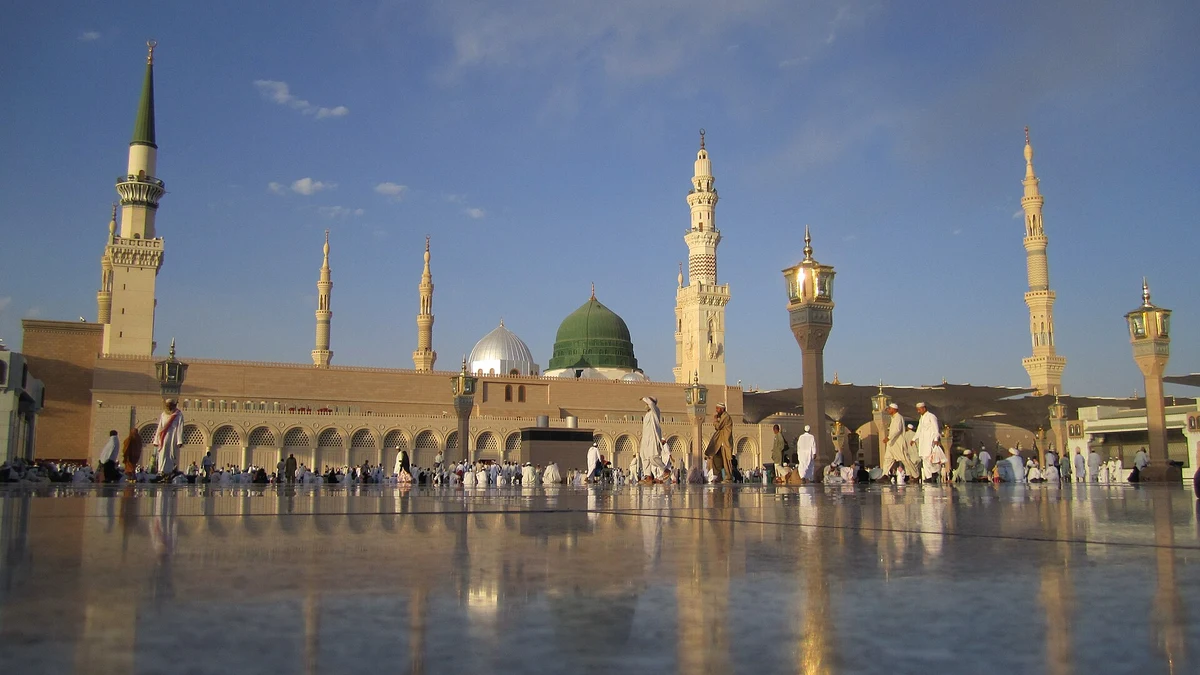
The Rawdah is one part of a visit to Madinah, and pilgrims who treat it as the only objective often miss the rest.
Ordinary prayer in the Prophet’s Mosque is separate from a booked Rawdah visit. Follow current access arrangements for the mosque and the salutations route; do not assume every area is open or queue-free. The reward for prayer in the mosque is described in Sahih al-Bukhari 1190.
The three mosques
Madinah holds a particular status as one of the three mosques towards which journeys are specifically undertaken, alongside Masjid al-Haram in Makkah and Masjid al-Aqsa, as reported in Sahih al-Bukhari 1189.
Quba and the wider ziyarat
Masjid Quba, the first mosque built in Islam, sits a short distance from the centre. The Prophet ﷺ used to visit it, and the reward for praying there is mentioned in Sunan Ibn Majah 1412. Most UK itineraries include it alongside other historical sites.
Time in Madinah is not a queue
Pilgrims sometimes spend their entire Madinah stay focused on securing one permit. The prayers, the quiet hours in the mosque and the sense of the city are available continuously, with no booking required.
Do not let one permit define the trip. If a Rawdah slot does not come through, your time in Madinah is not diminished. Pray in the mosque, send salutations, and use the days you have.
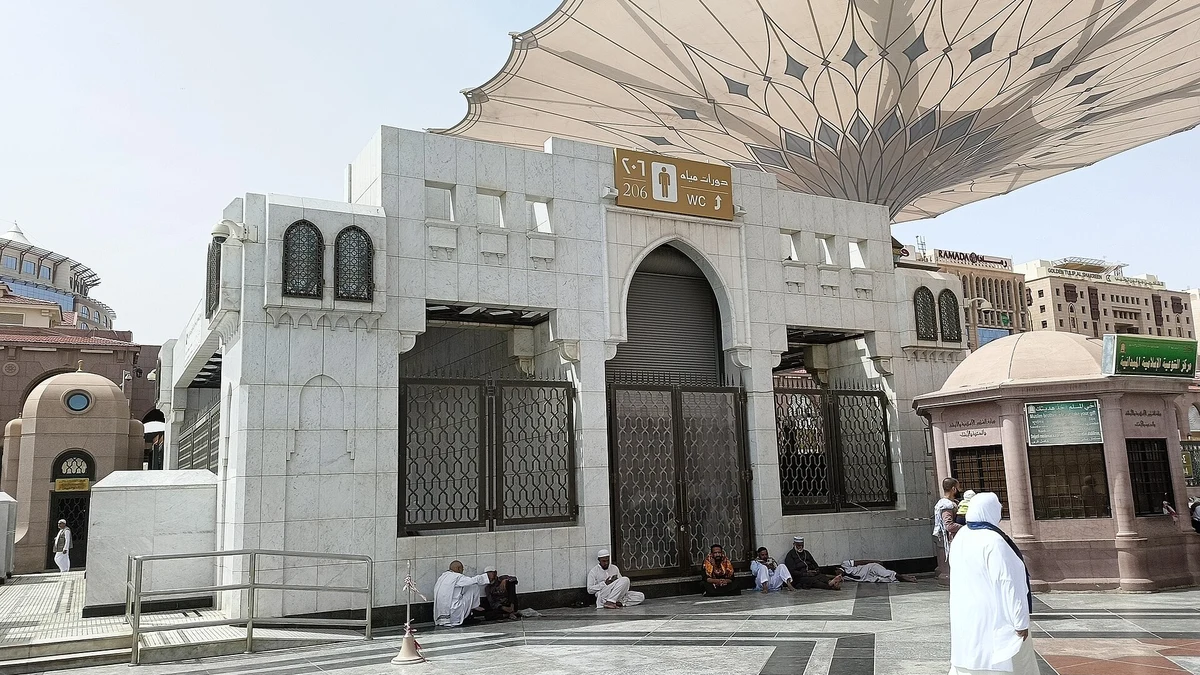
For help arranging Madinah nights and transfers around your plans, request a written itinerary from our UK team. A travel quote does not guarantee a Rawdah appointment, which remains subject to Nusuk’s rules and availability.
Practical tips for UK pilgrims
These come up repeatedly with pilgrims travelling from British airports.
Arrive early for your slot
The official Nusuk guidance asks you to arrive 30 minutes before the appointment. Allow additional time to reach the correct entry route from your hotel. Follow any more specific instructions issued with your booking.
Know your gate
The mosque has many gates, and yours is assigned to your booking. Identify it on a map the day before rather than searching for it while your slot runs down.
Dress and prepare sensibly
You will be standing and walking on marble, often barefoot. Bring a bag for your shoes, and allow for the temperature difference between the courtyard and the air-conditioned interior.
Plan around your travel between cities
Most UK itineraries combine Madinah with Makkah. If you are moving between them, check whether your permit sits comfortably around the transfer. Remember that travelling to Makkah means crossing the miqat, so read our guide to ihram rules before that leg.
Health and mobility
The walk from the gates to the Rawdah is longer than it appears on a map, and the mosque complex is vast. If you or a family member has limited mobility, raise it with your operator in advance and check current health guidance on TravelHealthPro before you travel.
Plan the day around the slot. If your permit is at two in the morning, do not also plan an early departure on the Haramain train that same morning. Build the itinerary around the slot you are given.
Common mistakes that cost pilgrims their permit
Every one of these is avoidable with a little preparation.
- Leaving Nusuk verification until after landing
- Checking for slots once and assuming none exist
- Booking a slot that clashes with a transfer or flight
- Arriving at the wrong gate
- Relying on the app rather than a saved screenshot
- Paying a third party for a permit that is free
- Missing the slot window entirely because the time was misread
The four-step check.
- Nusuk verified before you fly
- Slot saved offline
- Gate identified on a map
- Nothing else scheduled within two hours
Do those four and the visit goes smoothly.
The best time to visit for Rawdah access
When you travel changes how easily you will secure a slot, and by a wide margin.
The busiest periods
Ramadan is by far the heaviest demand of the year, particularly the final ten nights. The winter school holidays are the second peak for UK families. In both windows, slots are taken quickly and the mosque is full around every obligatory prayer.
The quieter months
Outside those peaks, availability improves noticeably. Pilgrims regularly secure a slot within a day or two of looking, and the walk to the gate is calmer at every hour.
Overnight slots
The hours after Isha and before Fajr are consistently the quietest. Men in particular often find availability overnight when daytime slots have gone. Anyone who can adjust their sleep for one night should consider it seriously.
Trade sleep for access. A three in the morning slot feels unappealing when you book it and rarely does afterwards. The mosque is quiet, the air is cool, and the visit is far less rushed than a midday slot.
If your slot is missed or cancelled
It happens, usually because of a delayed flight, a transfer that overran, or a misread time. It is recoverable.
Book again immediately
Open your booking in Nusuk and check which cancellation, rebooking or support options it offers. Repeat-visit limits and the immediate-track rules may affect eligibility, so do not assume a replacement slot is guaranteed.
Check the time format
Misreading a slot is more common than missing one. Confirm whether the time shown is in the twenty-four hour format and remember that Saudi Arabia is three hours ahead of UK time in winter and two hours ahead during British Summer Time.
If no slot comes through at all
Pray in the mosque, send salutations at the chamber and use your remaining days fully. The virtue of prayer in the Prophet’s Mosque, reported in Sahih Muslim 1394, applies throughout the building, not only within the Rawdah.
Set an alarm in local time. Change your phone to Saudi time on arrival and set an alarm ninety minutes before the slot. Nearly every missed booking traces back to a time-zone error rather than to traffic.
Visiting with children and older relatives
Family groups make up a large share of UK travel to Madinah, and the Rawdah needs a little more planning when you are not travelling alone.
Children and permits
Nusuk describes adding and managing companions for a Rawdah booking. Check the current age, identity and eligibility requirements for each person, including children. A family relationship does not automatically give someone access on another person’s permit.
Keep young children close
The area is crowded and the movement is continuous. Hold younger children rather than letting them walk separately, and agree a meeting point outside the gate before you go in, in case anyone is separated.
Older relatives and mobility
The distance from the gate to the Rawdah is considerable and the flow does not pause. If a parent or grandparent struggles with distance or standing, discuss assistance with your operator ahead of travel and consider a quieter overnight slot where the pace is gentler.
The Prophet ﷺ emphasised gentleness in all matters, as reported in Sahih Muslim 2594, and a crowded doorway is exactly where that applies.
Split the family if you need to. Men and women visit at different times anyway, so a family will usually be attending separately. Plan who is with which children for each slot before the day arrives.
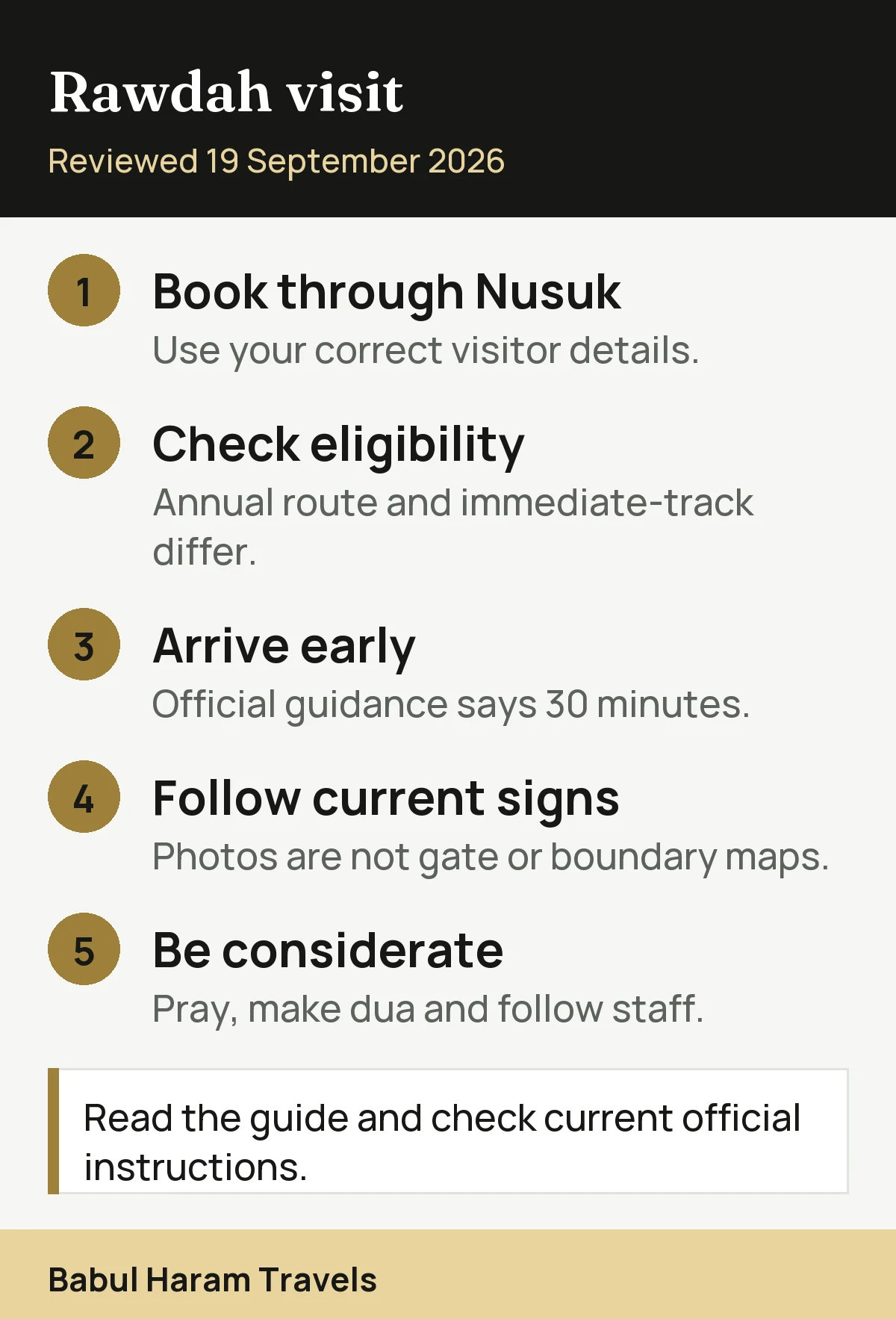
Download the Rawdah visit checklist
Babul Haram Travels produced this free checklist for UK pilgrims. It covers booking, timings, gates, etiquette and what to prepare before you travel.
Save it before you travel so it stays available without mobile data, and keep this article bookmarked for the references behind each point.
Tips for visiting the Rawdah from the UK
Seven steps in the order you will need them, whether you fly from London, Manchester or Birmingham.
- Check Nusuk before travel. Match your documents, follow the current visitor-category prompts and leave time to resolve any account error.
- Start checking early. Slots release on a rolling basis, so check daily rather than once.
- Book around your itinerary. Avoid slots that clash with transfers, the train or your flight.
- Save appointment details. Check the current entry code and any attendance confirmation in the app before leaving.
- Find your gate in advance. Locate it on a map the day before your slot.
- Arrive 30 minutes early. Follow your booking instructions and travel light.
- Pray briefly and move forward. Two short rak’ahs, a sincere dua, and give way to the next person.
Frequently asked questions about the Rawdah
What is the Rawdah?
The Rawdah is the area between the Prophet’s chamber and his pulpit inside Masjid an-Nabawi, described in authentic narrations as a garden from the gardens of Paradise. Follow current signs and staff directions to identify the authorised route.
Do I need a permit to visit the Rawdah?
Yes. A permit booked in advance through the official Nusuk platform is required for men and women alike. It is free of charge.
When do Rawdah slots open?
Slots are released on a rolling basis rather than all at once, and cancellations return slots to the system. Check the Nusuk app daily in the period before your visit rather than checking once.
How much does a Rawdah permit cost?
Nothing. Permits are issued free through Nusuk. Anyone charging you for a Rawdah slot is not operating through an official channel.
How long do you get inside the Rawdah?
Only a few minutes in practice. Movement is continuous and managed, so pray two short rak’ahs, make your dua, and move forward.
Can women visit the Rawdah?
Yes. Women visit during allocated times through separate gates. The windows are typically narrower than the men’s, so booking early matters.
Can I take photographs in the Rawdah?
Follow the current signs and staff instructions. Do not stop the visitor flow or photograph other people intrusively; keep your attention on worship rather than filming.
What if I cannot get a Rawdah permit?
Your visit to Madinah is not diminished. You can still pray in the Prophet’s Mosque, send salutations at the chamber, and spend unhurried time there without any permit.
A few minutes worth preparing for
The Rawdah is a defined space between the Prophet’s chamber and his minbar, visited through a managed appointment. The permit system exists so that those minutes are available to as many people as possible, rather than to whoever pushes hardest.
Go with the expectation of a brief, crowded and deeply ordinary few moments, and you will almost certainly come away with more than you expected. Go expecting solitude in a shared prayer space and you will spend the visit frustrated by the people around you, who have travelled just as far and want exactly the same thing.
Prepare properly, arrive early, pray briefly and give way. If you would like your Madinah nights, transfers and Rawdah slot planned around one another, our team can put a written itinerary together before you book anything.
You can compare durations and hotel distances on our Umrah packages page, request a dated breakdown of the full trip cost, or simply ask Babul Haram Travels for a written quote with your dates and departure airport. Before you fly, check the current GOV.UK travel advice for Saudi Arabia.
Editorial review: 19 September 2026. Travel rules and service availability can change; use the linked official sources for your dates. For a personal religious ruling, consult a qualified scholar.
Photo sources: Location photographs are credited under each image and are not representations of our customers, a particular hotel booking or current access routes. Featured photo: Uleke, CC BY-SA 3.0. Resized and cropped for this guide.
Photographs retain their linked licences.