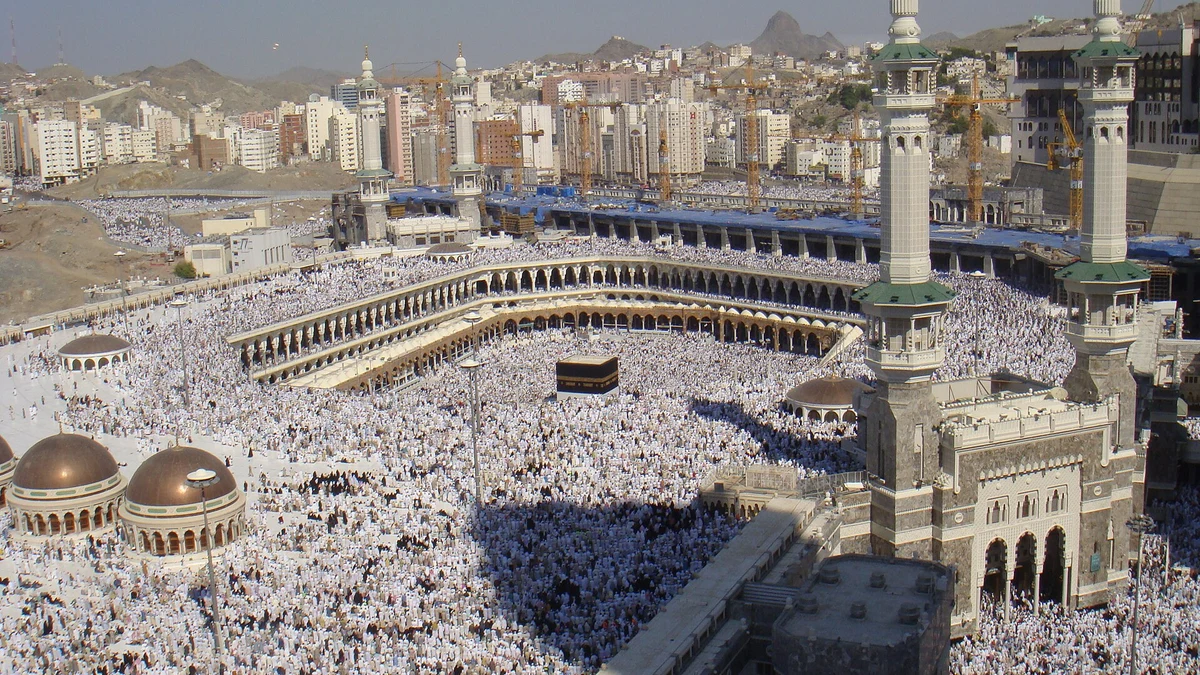
The difference between Hajj and Umrah comes down to four things: when each can be performed, whether it is obligatory, which rites it includes, and how long it takes. Both are journeys to the Sacred House in Makkah, both begin in ihram, and both include Tawaf and Sa’i. From there they separate.
This guide compares Hajj and Umrah for pilgrims travelling from the UK. It covers the rites unique to each, the calendar that governs them, the practical planning differences, and the honest cost drivers behind them, with references to the Quran, the Sunnah and current official Saudi and UK guidance.
If you are deciding which journey to make first, use the Hajj or Umrah decision table. Hajj has fixed dates and is an obligation when its conditions are met; Umrah has more flexible timing, subject to current access rules, but does not replace Hajj.
Hajj and Umrah at a glance
Before the detail, here is the comparison most pilgrims are looking for. Use it as a quick orientation, then read the sections below for the reasoning behind each row.
| Comparison | Hajj | Umrah |
|---|---|---|
| Status in Islam | Obligatory pillar, once in a lifetime for those able | Confirmed Sunnah, or obligatory once depending on the school |
| When | Fixed days of Dhul Hijjah only | Any month of the Islamic year |
| Core rites | Ihram, Tawaf, Sa’i, Arafat, Muzdalifah, Mina, Jamarat, sacrifice | Ihram, Tawaf, Sa’i, cutting the hair |
| Duration of rites | Five days (8-12 Dhul Hijjah), or six through the 13th | Usually two to four hours |
| Typical UK trip length | Two to four weeks | Seven to fourteen nights |
| Places available | Limited by the Saudi quota system | Not quota limited |
| Date flexibility | None, the window is fixed | High, choose your own dates |
| Relative cost | Substantially higher | Substantially lower |
The one-line answer. Hajj is an obligatory pillar of Islam performed once in a lifetime by those who are able, on fixed days of Dhul Hijjah. Umrah has fewer rites and no fixed annual date; scholars differ on whether it is obligatory once or a confirmed Sunnah.
What is Hajj?
Hajj is the fifth pillar of Islam. It is the annual pilgrimage to Makkah and the surrounding sites of Mina, Arafat and Muzdalifah, performed on specific days of Dhul Hijjah, the twelfth month of the Islamic calendar.
The obligation and who it applies to
The obligation is established in the Quran: Quran 3:97 states that pilgrimage to the House is a duty owed to Allah by those who are able to find a way to it. The condition of ability is part of the verse itself, not an afterthought.
Ability has three parts. Scholars generally read it as physical capability, financial capacity beyond your dependants’ needs and outstanding debts, and a safe, lawful route. If any is genuinely absent, the obligation is deferred rather than abandoned.
Why Hajj carries such weight
The Prophet Muhammad ﷺ said that an accepted Hajj has no reward less than Paradise, as recorded in Sahih al-Bukhari 1773. He also said that whoever performs Hajj without obscenity or wrongdoing returns as on the day his mother bore him, in Sahih al-Bukhari 1521.
That standing explains the scale of the operation around it. Hajj gathers well over a million people into the same few square miles on the same days, which is why it is quota-managed, tightly scheduled and more expensive than any other journey in the Muslim calendar.
What is Umrah?
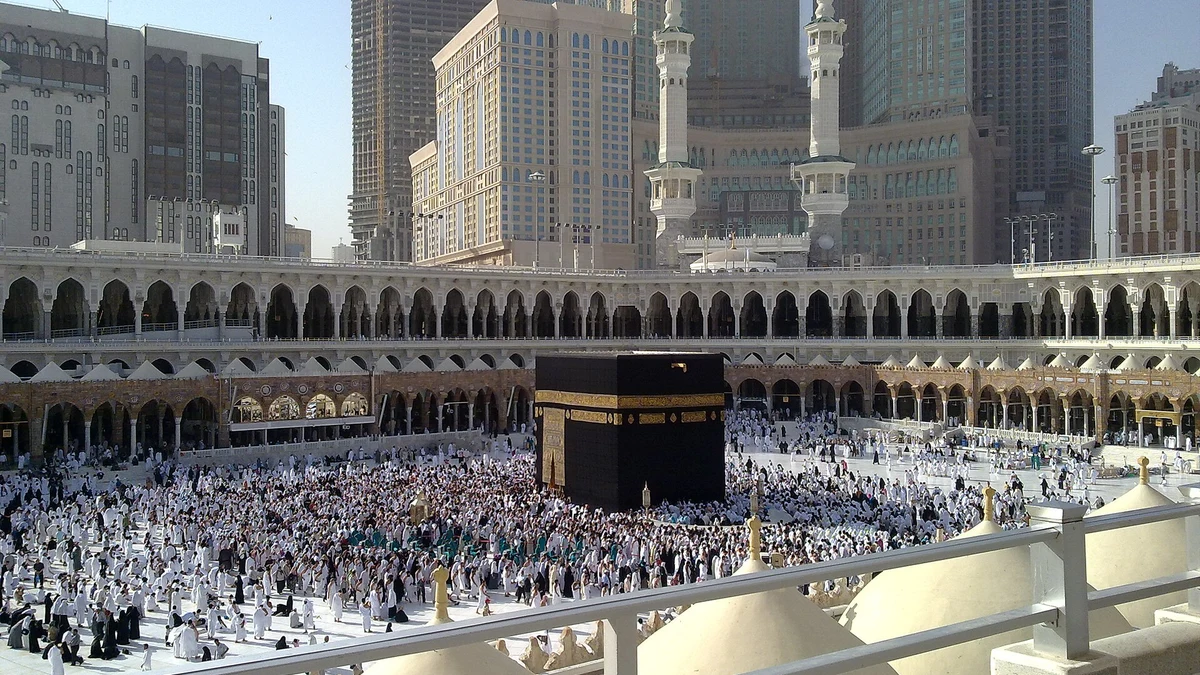
Umrah is often called the lesser pilgrimage, but the word “lesser” describes its scope rather than its value. It is a visit to the Sacred House involving ihram, Tawaf, Sa’i and the cutting of hair, and it can be performed in any month.
Is Umrah compulsory?
Scholars differ. The Shafi’i and Hanbali schools hold Umrah to be obligatory once in a lifetime for those able, while the Hanafi and Maliki schools classify it as a confirmed Sunnah. The verse most often cited is Quran 2:196, which instructs believers to complete both Hajj and Umrah for Allah.
A practical note for UK pilgrims. This is a recognised difference of opinion among qualified scholars, not a dispute you need to resolve before booking. Follow the position of the school you normally follow, or ask your local imam.
The reward attached to Umrah
The Prophet ﷺ said that one Umrah to the next is an expiation for what lies between them, reported in Sahih Muslim 1349. Umrah performed in Ramadan is described in Sahih al-Bukhari 1863 as equivalent in reward to Hajj, though it does not remove the separate obligation of Hajj itself.
What makes Hajj distinct
The clearest way to see the difference between Hajj and Umrah is to look at what Hajj contains that Umrah does not.
The rites found only in Hajj
Standing at Arafat on the ninth of Dhul Hijjah is the defining act. The Prophet ﷺ said “Hajj is Arafah”, recorded in Sunan an-Nasa’i 3016. Miss that standing and the Hajj is not valid, whatever else was performed.
Alongside it sit Muzdalifah, Mina and the Jamarat. Sacrifice is required for Tamattu’ and Qiran, while the farewell Tawaf has exemptions and details that your Hajj guide should explain. These are not extra steps that you add to an ordinary Umrah.
Laid out day by day, the shape becomes clear. The eighth of Dhul Hijjah is spent at Mina. The ninth is the standing at Arafat until sunset, then the night at Muzdalifah.
The tenth includes major rites such as stoning, hair cutting and Tawaf al-Ifadah, with sacrifice according to your type of Hajj. Pilgrims stone the pillars on the eleventh and twelfth, and on the thirteenth if they stay that extra day. Follow your group’s religious guide for the permitted order and any concessions.
The call to pilgrimage is described in Quran 22:27. Permission to depart after two days or remain longer is stated in Quran 2:203.
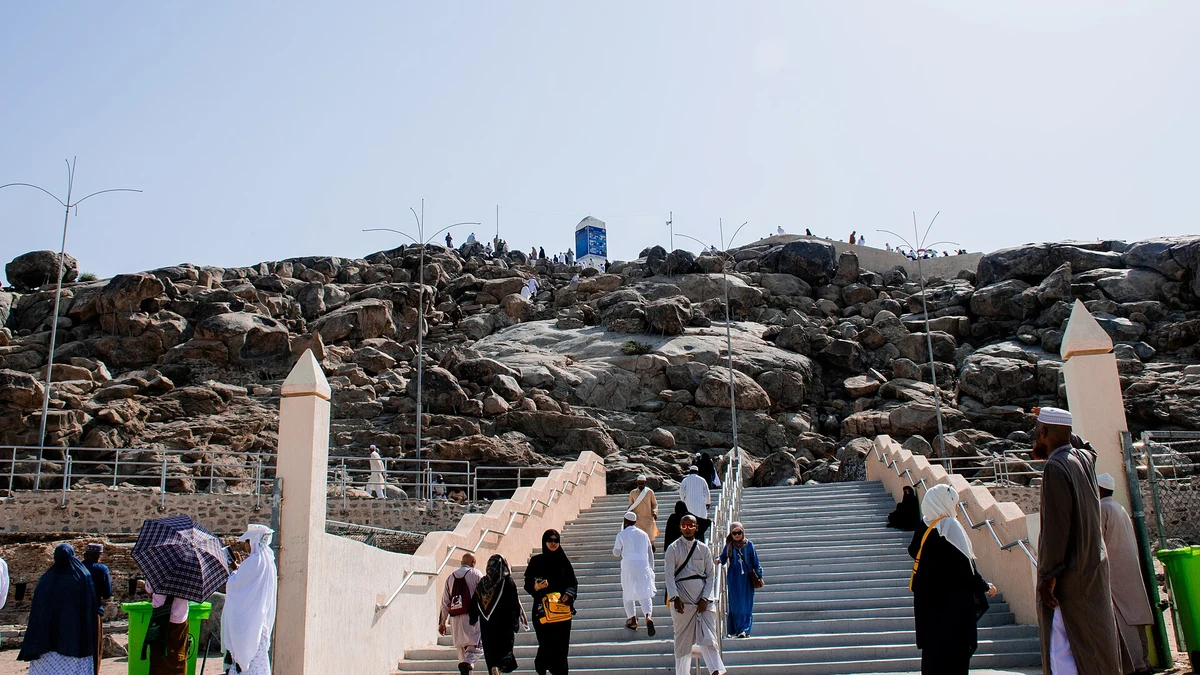
The core distinction. Umrah has no Arafat, no Muzdalifah, no Mina and no Jamarat. Hajj normally spans five or six days of rites, depending on departure from Mina on the twelfth or thirteenth.
The five- or six-day sequence
The usual sequence runs from 8 to 12 Dhul Hijjah over five days, or continues to the thirteenth over six days. The lunar dates move roughly eleven days earlier each Gregorian year. Arafat has its own essential time window, which cannot be replaced by arriving on a different date.
What makes Umrah distinct
Umrah’s distinguishing feature is not a ritual it adds but the freedom it allows.
A shorter sequence of rites
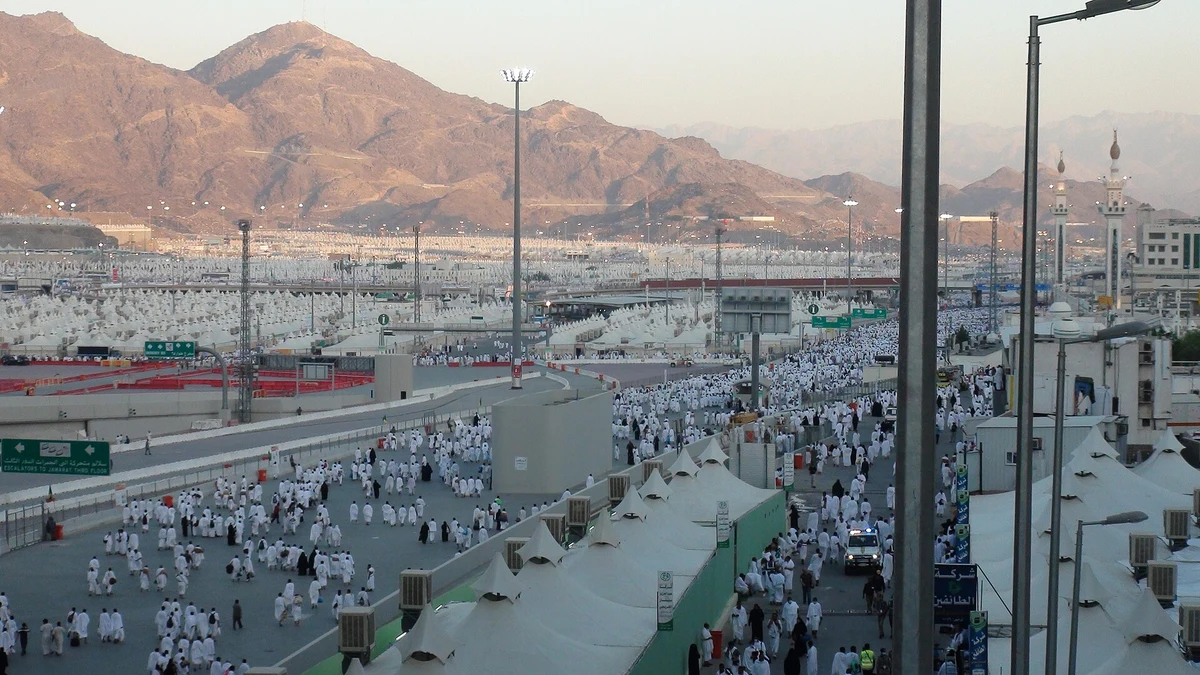
Enter ihram at the miqat, perform Tawaf of seven circuits, pray two rak’ahs where practical, drink Zamzam, complete Sa’i between Safa and Marwah, then cut or shorten the hair. That is the whole sequence. Most pilgrims complete it in two to four hours depending on crowds.
Our step-by-step walkthrough of each stage is in how to perform Umrah, and the clothing and restriction rules are covered in ihram rules.
Flexibility through the year
Umrah can be performed in any month. That single fact changes everything about planning it from the UK: you can work around school holidays, annual leave, Ramadan, or simply cheaper flight weeks.
Worth knowing. Umrah is not permitted during the days of Hajj itself for those not performing Hajj, and the Haram operates under different crowd management in Dhul Hijjah and late Ramadan. Confirm current arrangements on Nusuk before fixing dates.
When can you perform each?
This is the difference that decides most itineraries, so it is worth seeing laid out against the Islamic year.
| Journey | When | Flexibility |
|---|---|---|
| Umrah | Any month of the Islamic year | High, choose your own dates |
| Hajj | 8 to 13 Dhul Hijjah only | None, the window is fixed |
| Missed window | Umrah can be rebooked any time | Hajj waits a full year |
| UK planning | Umrah fits annual leave | Hajj needs leave booked far ahead |
The Hajj window in the Islamic calendar
Because the Islamic year is lunar and about eleven days shorter than the Gregorian year, the Hajj season moves steadily through the seasons. Over roughly three decades it passes through summer heat and milder winter conditions, which materially affects how physically demanding a given year’s Hajj is.
Choosing an Umrah season from the UK
Ramadan and the winter school holidays are the busiest and most expensive Umrah periods from British airports. Quieter months usually mean shorter queues at Tawaf and better hotel value for the same budget.
If your dates are flexible, the shoulder weeks either side of a peak are often the sweet spot: the Haram is calmer, hotel rates have dropped back, and direct flights from Heathrow, Manchester and Birmingham are easier to secure without a long connection. Families tied to school terms have less room to move, which is worth acknowledging early rather than discovering after comparing quotes.
A simple planning rule. For Umrah, choose your dates and then your hotel. For Hajj, the dates choose you, so the only real decisions left are hotel distance, occupancy and which organiser you trust.
The rituals compared step by step
Placed side by side, the difference between Hajj and Umrah becomes clear. Both include ihram, Tawaf and Sa’i, but the timing depends on whether your Hajj is Tamattu’, Qiran or Ifrad. Do not use an Umrah sequence alone as a complete Hajj instruction sheet.
| Stage | Hajj | Umrah |
|---|---|---|
| Enter ihram at the miqat | Yes | Yes |
| Talbiyah | Yes | Yes |
| Tawaf of seven circuits | Yes | Yes |
| Sa’i between Safa and Marwah | Yes | Yes |
| Day at Mina (8 Dhul Hijjah) | Yes | No |
| Standing at Arafat (9 Dhul Hijjah) | Yes, essential | No |
| Night at Muzdalifah | Yes | No |
| Stoning at the Jamarat | Yes | No |
| Sacrifice | Yes, for Tamattu’ and Qiran | No |
| Cutting or shortening the hair | Yes | Yes |
| Farewell Tawaf | Yes | Not required |
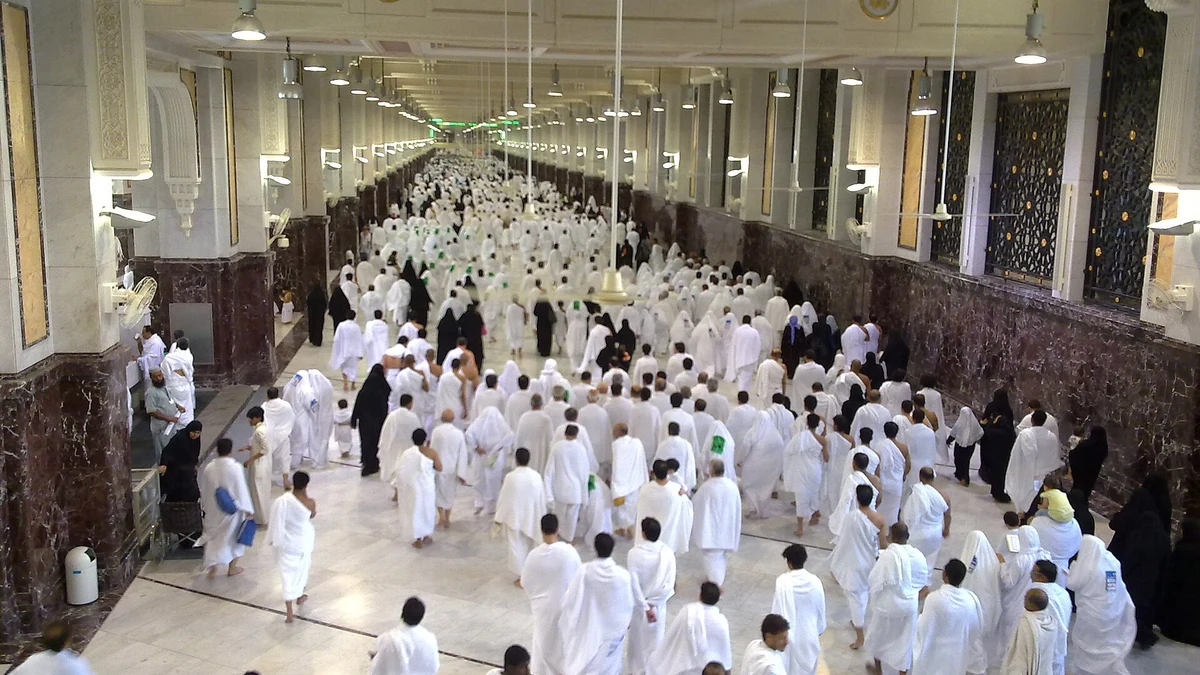
A point pilgrims often miss. Someone performing Hajj Tamattu’ actually performs a complete Umrah first, leaves ihram, then re-enters ihram for Hajj on the eighth of Dhul Hijjah. The two are not alternatives in that case; one contains the other.
How long does each take?
The rites themselves differ sharply in duration, and so do the trips built around them.
A typical UK Hajj itinerary
Many UK Hajj trips include stays before or after the five- or six-day sequence of rites. The overall length depends on the booked package, flights and allocated accommodation. Confirm the actual itinerary rather than assuming every package lasts the same number of weeks.
That allocation is why two UK pilgrims on the same Hajj can have noticeably different itineraries. One group may visit Madinah before the rites and another after, depending entirely on when their accommodation and flights were released. It is not a difference in package quality, and it is worth understanding before comparing two quotes.
A typical UK Umrah itinerary
Umrah packages from the UK commonly run seven, ten or fourteen nights, split between Makkah and Madinah. The rites occupy a few hours; the rest of the trip is worship, rest and ziyarat. You can see current durations on our Umrah packages page.
Plan annual leave differently. A UK Umrah can be done comfortably within a fortnight’s leave. Hajj usually requires a block of leave booked well in advance, and the dates are not yours to move.
Why is Hajj so expensive?
This is one of the most common questions British Muslims ask, and the answer is structural rather than anything to do with a particular agent.
What drives the Hajj price
Four pressures stack up. Demand is concentrated into a handful of days, so flights and hotels price accordingly. Saudi Arabia operates a quota system, which caps supply per country.
The Mina and Arafat camp infrastructure, transport and permits are an additional cost layer that simply does not exist for Umrah. And the stay is longer.
The quota point is the one most people underestimate. Because places are capped rather than set by market supply, a UK operator cannot respond to high demand by simply adding another departure. That scarcity feeds directly into price in a way it never does for Umrah, where an operator can add capacity in a quieter month.
| Cost driver | Hajj | Umrah |
|---|---|---|
| Visa and official permits | Major | Minor |
| Return flights from the UK | Major | Moderate |
| Hotel nights required | Major | Moderate |
| Mina and Arafat camp | Major | Not applicable |
| Internal transport | Major | Minor |
| Length of stay | Two to four weeks | Seven to fourteen nights |
| Choice of travel dates | None | Wide |
How Umrah pricing differs
Umrah has none of the camp infrastructure, no quota auction dynamic and no immovable date. Move your travel two weeks either side of a peak and the same standard of hotel can cost materially less. That flexibility is the single biggest lever on price, and it is one Hajj pilgrims do not have.
Judging a quote. Compare distance from the Haram, number of nights, room occupancy, whether flights are direct, and what transport is included. A cheaper headline figure often means a further hotel, quadruple occupancy or an indirect routing.
How much does it cost to go for Hajj from the UK?
Honest answer: it varies widely by year, hotel distance, room occupancy and airline, and any fixed figure quoted in an article ages badly. What is stable is the relationship between the two journeys.
Hajj from the UK consistently costs several times a comparable Umrah trip of the same hotel standard, because of the cost layers described above. Within Hajj itself, the biggest variables are proximity to the Haram and how many people share a room.
Ask for it in writing. A written quote should itemise flights, hotel names and distances, nights in each city, occupancy, transport, visa and permit costs. If a breakdown is not offered, that is a reason to ask more questions. You can request a written quote from us at any time.
For the Umrah side of this comparison, use our published Umrah package options as a starting point. Request a dated quote with occupancy and inclusions stated; a changing advertised price is not a guaranteed final total.
The practical differences for UK pilgrims
Beyond worship, the two journeys behave very differently as travel arrangements.
Visas and entry routes
Umrah is generally accessible through the routes described on Nusuk, and UK passport holders have several entry options depending on current policy. Hajj is different: places are allocated through the Saudi quota system and must be booked through an approved organiser.
Always check the current position on GOV.UK entry requirements for Saudi Arabia before committing, and see our guide to the Umrah visa from the UK.
Check health requirements for either journey. Current GOV.UK entry guidance requires meningococcal quadrivalent certification for Hajj and Umrah pilgrims. Use TravelHealthPro and your travel clinic for certificate timing, validity and requirements linked to your route.
Physical demands
Umrah is walkable for most reasonably mobile adults. Hajj involves long distances on foot, sleeping in camps, and crowd density that is genuinely demanding. If you are managing a health condition, that distinction should shape which journey you make first.
Heat is the other factor. When the Hajj season falls in the Saudi summer, temperatures during the standing at Arafat can be severe, and the walking between Mina, Muzdalifah and the Jamarat is done largely in the open. An Umrah in a cooler month is a very different physical proposition, which is worth weighing if you are older or travelling with elderly parents.
What Hajj and Umrah share
The similarities matter as much as the differences, especially if Umrah is your first journey.
Both require entering ihram at a designated miqat with a sincere intention. Both centre on Tawaf around the Kaaba and Sa’i between Safa and Marwah, the hills mentioned in Quran 2:158.
Both include cutting or shortening the hair and restrictions while in ihram. For Umrah, hair cutting follows Tawaf and Sa’i and ends the rite. Hajj has stages of release and further acts, so shaving alone does not mean the whole Hajj is complete.
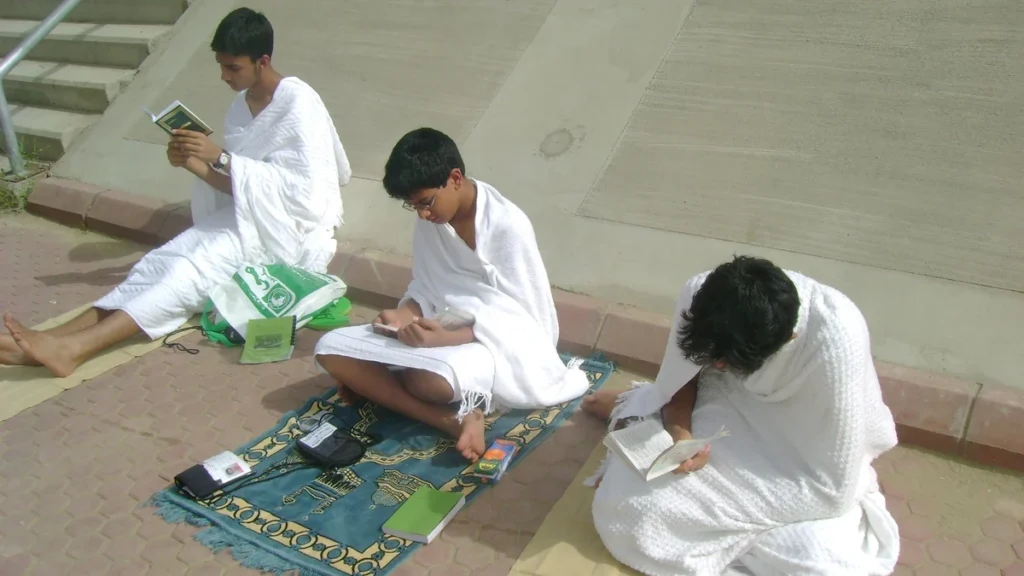
The manner of performing Sa’i is described in Sahih Muslim 1218a. Ihram restrictions include perfume, deliberate hair or nail removal and prohibited fitted garments for men. Stitching in a hem or money belt is not itself the issue; read the qualified explanation in our ihram rules guide.
Why this helps. Performing Umrah first is genuine preparation for Hajj. You learn the miqat, the ihram restrictions, the geography of the Haram and the rhythm of Tawaf and Sa’i without the crowd pressure of Dhul Hijjah.
Common misconceptions about the difference between Hajj and Umrah
A few misunderstandings come up often enough with UK pilgrims that they are worth addressing directly.
“Umrah is just a shorter Hajj”
They are separate acts of worship, not long and short versions of the same one. Umrah is complete in itself the moment the hair is cut. It is not an abbreviated Hajj, and performing it does not leave anything unfinished.
“Umrah in Ramadan counts as my Hajj”
The narration equating Umrah in Ramadan with Hajj describes the scale of reward, not a transfer of legal obligation. Scholars are agreed that the duty of Hajj remains on anyone able to perform it, regardless of how many Umrahs they have completed.
“I can decide to perform Hajj once I arrive”
Hajj cannot be added to an Umrah trip on arrival. Places are allocated in advance under the quota system and require the correct permit. A pilgrim in Makkah during Dhul Hijjah without that permit cannot simply join the rites.
Check before you assume. Permit rules, entry routes and health requirements are reviewed by the Saudi authorities each year. Treat any advice more than a season old, including guidance from friends and family, as something to verify rather than rely on.
Should You Perform Hajj or Umrah First?
You do not have to complete a separate Umrah trip before your first Hajj. Decide the obligation question before comparing hotel prices; the conditions of ability in Quran 3:97 concern your circumstances, not whether a smaller trip feels easier.
| Your situation | Next decision | What to check |
|---|---|---|
| You have not performed Hajj and can meet its conditions | Prioritise arranging the obligatory Hajj rather than treating Umrah as a substitute | Ask a qualified scholar about ability; confirm an authorised Hajj place and the correct permission |
| You can afford Umrah but are unsure whether Hajj is currently within your means | Assess dependants, debts, health and a lawful route before spending the travel fund | Whether an Umrah booking would use money needed for an obligation; do not decide from a headline package price |
| You have already fulfilled Hajj | Compare a further voluntary journey with your family and financial responsibilities | Dates, health, caring duties and the actual itinerary |
| You are booking Hajj Tamattu’ | Learn both sets of rites as part of that Hajj journey | When your Umrah ends and when you enter ihram again for Hajj |
No number of Umrahs replaces an obligatory Hajj. There is no seven-Umrahs-for-one-Hajj conversion. The Ramadan narration in Bukhari 1863 concerns reward, not a waiver of the separate duty.
Do not delay Hajj indefinitely. Classical scholars warned against postponing the obligation once ability is present. Equally, taking on debt you cannot service in order to travel is not what the verse requires.
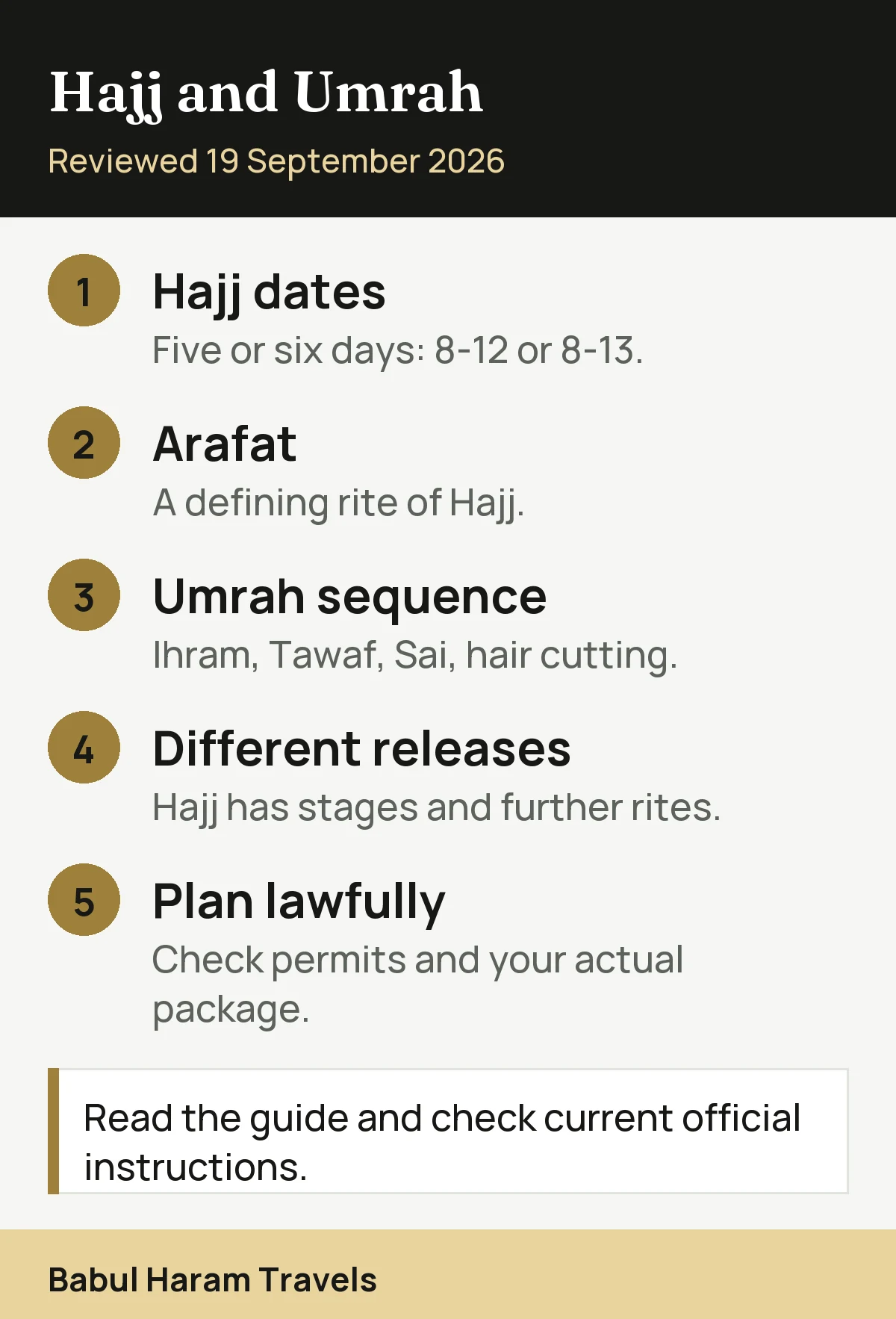
Download the Hajj and Umrah comparison checklist
The free checklist summarises the rites, timing, duration and preparation differences covered in this article in a format you can print or keep on your phone.
Save it before you travel so it stays available without mobile data. Keep this article bookmarked for the explanations and the source links behind each point.
Tips for UK pilgrims choosing between Hajj and Umrah
These seven steps come up repeatedly with pilgrims travelling from London, Manchester, Birmingham and Glasgow.
- Settle the obligation question first. If you genuinely meet the conditions of ability for Hajj, treat it as the priority rather than a someday plan.
- Use Umrah as a rehearsal. Learning ihram, Tawaf and Sa’i outside Hajj season makes the larger journey far less daunting.
- Book Hajj leave a year ahead. The dates move earlier each year and will not bend to your employer’s calendar.
- Verify the organiser. For Hajj, confirm the operator is approved under current Saudi arrangements before any payment.
- Compare like with like. Hotel distance, occupancy and direct flights explain most price gaps between quotes.
- Check health requirements early. Both Hajj and Umrah have medical entry requirements; check the current certificate rules with a travel clinic.
- Prepare the worship, not just the logistics. Learn the rites and a short list of duas before you fly. Our Umrah dua guide is a good starting point.
Frequently asked questions
What is the main difference between Hajj and Umrah?
Hajj is an obligatory pillar performed only on fixed days of Dhul Hijjah and includes Arafat, Muzdalifah, Mina and the Jamarat. Umrah is a shorter, non-time-bound journey of ihram, Tawaf, Sa’i and cutting the hair, which can be performed at any time of year.
Can performing Umrah replace the obligation of Hajj?
No. Umrah carries great reward, and Umrah in Ramadan is described as equal in reward to Hajj, but it does not discharge the separate obligation of Hajj for anyone who is able to perform it.
Are seven Umrahs equal to one Hajj?
Seven Umrahs do not fulfil an obligatory Hajj, and there is no such numerical conversion. The narration about Umrah in Ramadan concerns reward; Hajj remains a separate duty for those who meet its conditions.
Is Umrah compulsory?
Scholars differ. The Shafi’i and Hanbali schools hold it obligatory once for those able; the Hanafi and Maliki schools consider it a confirmed Sunnah. Follow the position of the school you normally follow.
Can Hajj and Umrah be performed on the same journey?
Yes. In Hajj Tamattu’ the pilgrim performs Umrah first, exits ihram, then re-enters ihram for Hajj.
Qiran combines both in a single ihram. Ifrad is Hajj alone.
How long do Hajj and Umrah take?
Umrah often takes a few hours, with longer waits during busy periods. The usual Hajj sequence spans five days from 8 to 12 Dhul Hijjah, or six if you remain until the thirteenth. The whole trip may be longer than the rites themselves.
Why is Hajj so expensive compared with Umrah?
Demand concentrates into a few fixed days, supply is quota-limited, and Hajj adds camp accommodation at Mina and Arafat, additional transport and permits, and a longer stay. Umrah has none of those layers and allows you to move your dates to cheaper weeks.
Do UK pilgrims need different visas for Hajj and Umrah?
The routes differ. Umrah is generally accessible through the options published on Nusuk, while Hajj places are allocated under the Saudi quota system through approved organisers. Check GOV.UK entry requirements before booking either.
Should I perform Umrah before Hajj?
If you are not yet able to perform Hajj, Umrah is an excellent first journey and genuine preparation. If you are able to perform Hajj now, most scholars advise not delaying the obligation.
Keep the comparison with you
The difference between Hajj and Umrah is not a matter of one being important and the other optional. Hajj is the obligation that completes a pillar of Islam. Umrah is the journey that keeps the Sacred House within reach in every other month of the year.
Download the checklist, learn the rites of whichever journey you are making, and ask Babul Haram Travels for any quote in writing so you can compare it properly. If you would like help matching dates, airports and hotel distance to your budget, our team will put a written itemised itinerary together for you.
Babul Haram Travels is a UK Umrah and Hajj specialist, and we put every quote in writing before you commit.
Editorial review: 19 September 2026. Travel rules and service availability can change; use the linked official sources for your dates. For a personal religious ruling, consult a qualified scholar.
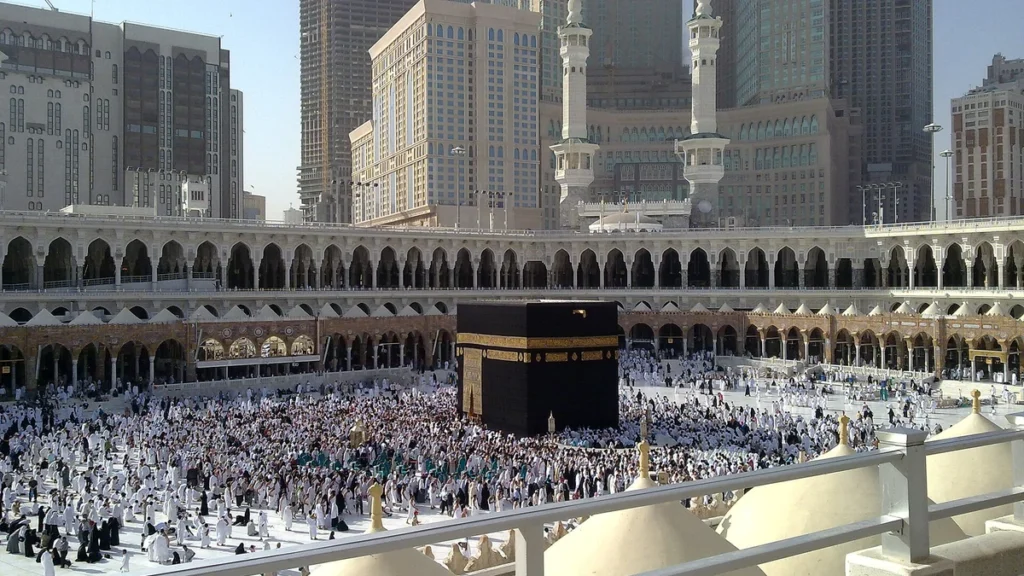
Photo sources: Location photographs are credited under each image and are not representations of our customers, a particular hotel booking or current access routes. Featured photo: Al Jazeera English, CC BY-SA 2.0. Resized and cropped for this guide.
Photographs retain their linked licences.