The dua for travelling is the supplication the Prophet ﷺ said each time he set out on a journey, reported in Sahih Muslim. This guide gives the dua for travelling in Arabic, with a transliteration and its meaning in English, then the duas for the car, the plane, leaving home and coming back, in the order you need them.
Every dua below links to its source, so you can check the wording yourself before you travel.
Key takeaways
- One main dua: say “Allahu akbar” three times, then the dua from Sahih Muslim 1342.
- Car or plane: the sources give no separate dua for each. It is the same dua.
- Short on time? The opening lines come from the Quran (43:13–14).
- Coming home: the same dua, with a short addition the Prophet ﷺ said on return.
What is the dua for travelling?
When the Prophet ﷺ mounted his camel to set out on a journey, he said “Allahu akbar” three times and then this dua, as Ibn Umar reported. It asks Allah for righteousness on the way, an easy journey, and protection for the family left at home. Here is the dua for travelling in Arabic, with its transliteration and meaning:
سُبْحَانَ الَّذِي سَخَّرَ لَنَا هَذَا وَمَا كُنَّا لَهُ مُقْرِنِينَ وَإِنَّا إِلَى رَبِّنَا لَمُنْقَلِبُونَ اللَّهُمَّ إِنَّا نَسْأَلُكَ فِي سَفَرِنَا هَذَا الْبِرَّ وَالتَّقْوَى وَمِنَ الْعَمَلِ مَا تَرْضَى اللَّهُمَّ هَوِّنْ عَلَيْنَا سَفَرَنَا هَذَا وَاطْوِ عَنَّا بُعْدَهُ اللَّهُمَّ أَنْتَ الصَّاحِبُ فِي السَّفَرِ وَالْخَلِيفَةُ فِي الأَهْلِ اللَّهُمَّ إِنِّي أَعُوذُ بِكَ مِنْ وَعْثَاءِ السَّفَرِ وَكَآبَةِ الْمَنْظَرِ وَسُوءِ الْمُنْقَلَبِ فِي الْمَالِ وَالأَهْلِ
Transliteration: Subhanal-ladhi sakhkhara lana hadha wa ma kunna lahu muqrinin, wa inna ila Rabbina la-munqalibun. Allahumma inna nas’aluka fi safarina hadhal-birra wat-taqwa, wa minal-‘amali ma tarda. Allahumma hawwin ‘alayna safarana hadha, watwi ‘anna bu’dah. Allahumma antas-sahibu fis-safar, wal-khalifatu fil-ahl. Allahumma inni a’udhu bika min wa’tha’is-safar, wa ka’abatil-manzar, wa su’il-munqalabi fil-mali wal-ahl.
Meaning: “Hallowed is He Who subdued for us this (ride) and we were not ourselves powerful enough to use It as a ride, and we are going to return to our Lord. O Allah, we seek virtue and piety from Thee in this journey of ours and the act which pleaseth Thee. O Allah, lighten this journey of ours, and make its distance easy for us. O Allah, Thou art (our) companion during the journey, and guardian of (our) family. O Allah, I seek refuge with Thee from hardships of the journey, gloominess of the sights, and finding of evil changes in property and family on return.”
Reference: Sahih Muslim 1342.
You can say it in Arabic from memory or read it from your phone. If you are still learning the Arabic, read the dua for travelling in English while you practise, so you understand what you are asking for.
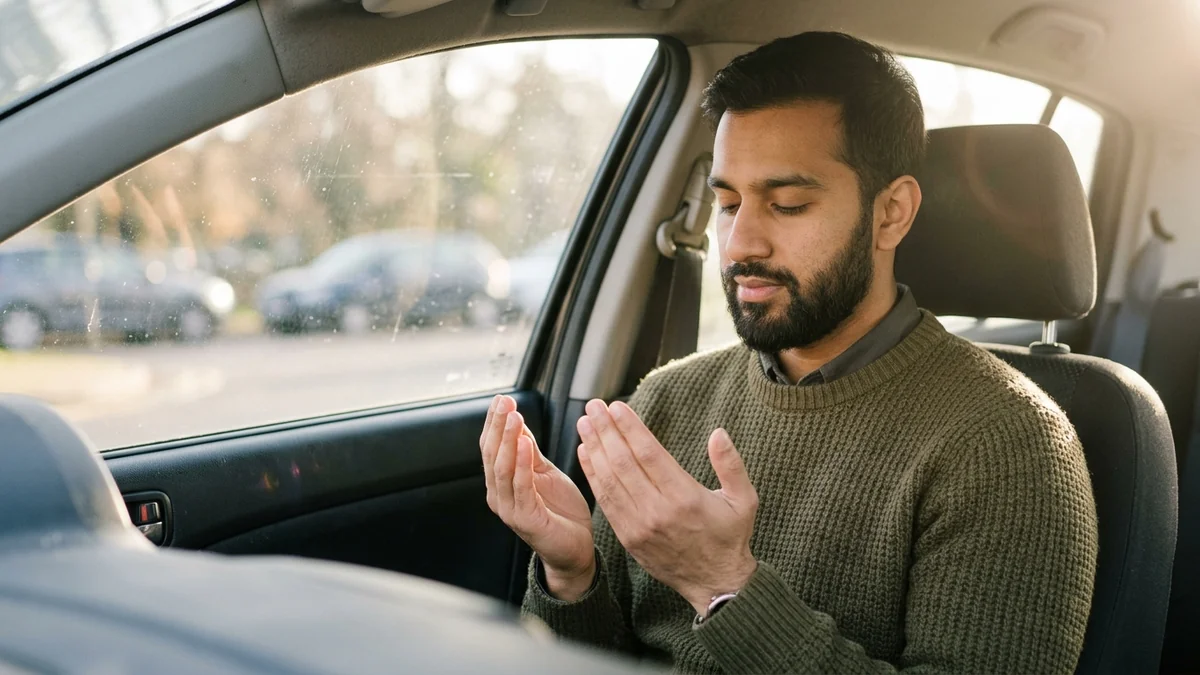
For the duas you will need during Umrah itself, see our guide to duas for Umrah.
The short travel dua from the Quran
The first lines of the travel dua are words of the Quran. In Surah az-Zukhruf, Allah tells people to remember His favour once they are settled on their ride, saying:
سُبْحَـٰنَ ٱلَّذِى سَخَّرَ لَنَا هَـٰذَا وَمَا كُنَّا لَهُۥ مُقْرِنِينَ
وَإِنَّآ إِلَىٰ رَبِّنَا لَمُنقَلِبُونَ
Transliteration: Subhanal-ladhi sakhkhara lana hadha wa ma kunna lahu muqrinin. Wa inna ila Rabbina la-munqalibun.
Meaning: “Glory be to the One Who has subjected these for us, for we could have never done so ˹on our own˺. And surely to our Lord we will ˹all˺ return.”
Reference: Quran 43:13–14 (meaning: Dr. Mustafa Khattab, The Clear Quran (quran.com)).
The verse before speaks of ships and animals, but the words fit any ride. On a short journey, or when you only have a moment, these two lines are a simple way to begin.
What to say as you get into the vehicle
Ali ibn Abi Talib once showed the full sequence as he mounted his animal, and said he had seen the Prophet ﷺ do the same. Ali ibn Rabi’ah reported it in Sunan Abi Dawud 2602:
- As you step in: “Bismillah” (in the name of Allah).
- Once you are seated: “Alhamdulillah” (praise be to Allah).
- The Quran lines above: “Subhanal-ladhi sakhkhara lana hadha…”
- “Alhamdulillah” three times, then “Allahu akbar” three times.
- Then these words:
سُبْحَانَكَ إِنِّي ظَلَمْتُ نَفْسِي فَاغْفِرْ لِي فَإِنَّهُ لاَ يَغْفِرُ الذُّنُوبَ إِلاَّ أَنْتَ
Transliteration: Subhanaka inni zalamtu nafsi, faghfir li, fa innahu la yaghfirudh-dhunuba illa ant.
Meaning: “glory be to Thee, I have wronged myself, so forgive me, for only Thou forgivest sins”
Reference: Sunan Abi Dawud 2602, graded Sahih (Al-Albani).
In the same report, the Prophet ﷺ laughed and explained that Allah is pleased with His servant who asks Him to forgive his sins, knowing that no one else forgives them.
Dua for travelling in a car
The sources in this guide give no separate car dua. The dua for travelling in a car is the same dua the Prophet ﷺ said on his camel: say it once the journey starts.
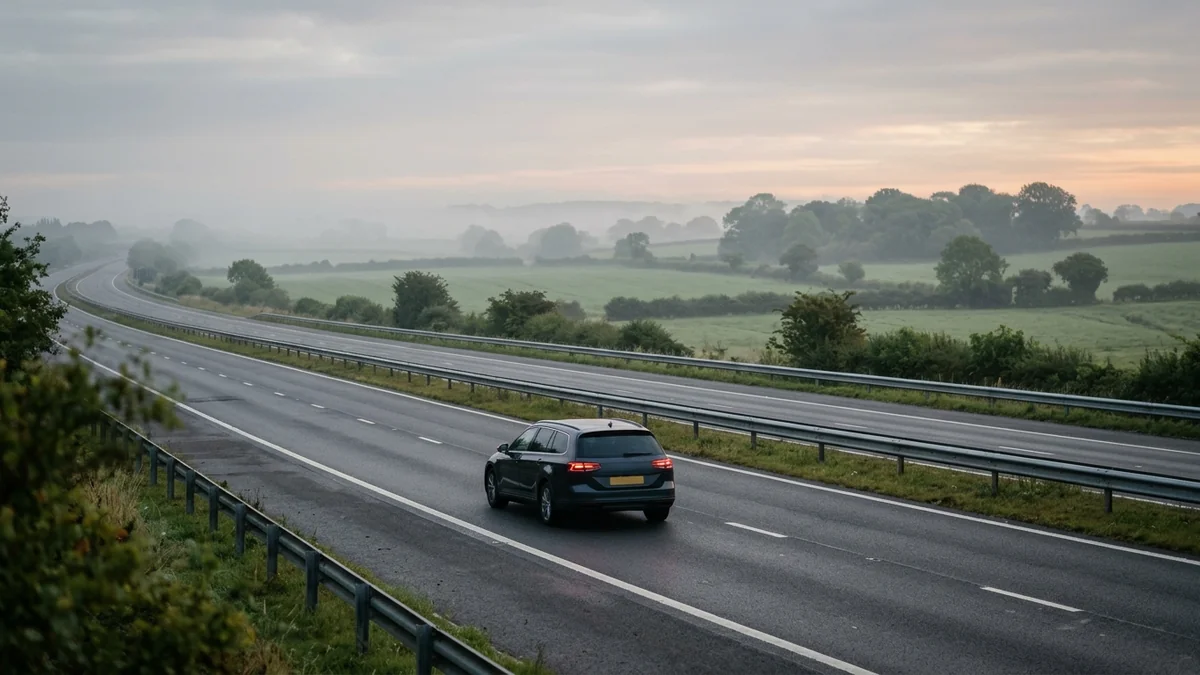
If you are driving, keep your eyes on the road and say it from memory, or ask a passenger to read it aloud. On the way to the airport, the whole family can say it together.
On our Umrah packages, airport and city transfers in Saudi Arabia are included, so you can say the dua again as each transfer sets off.
Dua for travelling by plane
The dua for travelling on a plane is the same dua again. Say it once you are seated and the flight is setting off. You can say it quietly; there is no need to say it aloud.
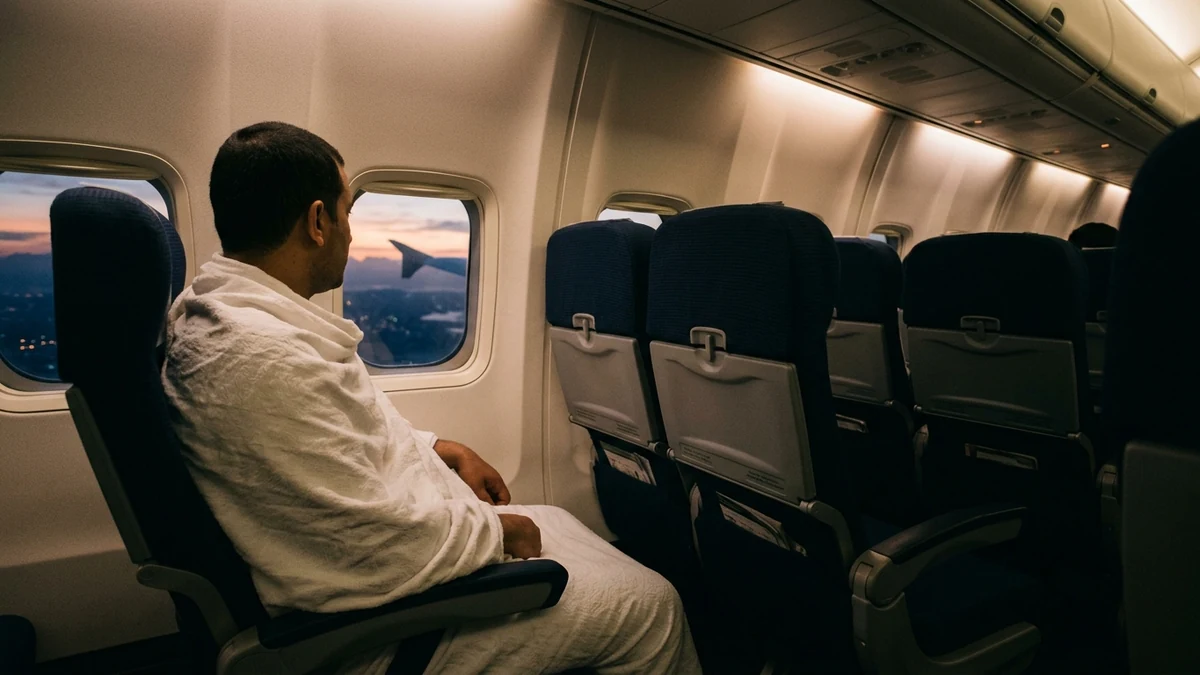
Jabir ibn Abdullah said that whenever they went up a place on a journey they said “Allahu akbar”, and whenever they went down a place they said “Subhan Allah” (Sahih al-Bukhari 2993). The hadith describes travel over land; it does not mention aircraft.
Flying to Jeddah for Umrah, you pass a miqat before landing. Check which miqat applies on your flight and the ihram rules before you board.
Before you leave home: the farewell duas
Three duas belong to the moment you leave: one for you as you step out of the door, and two that family and friends can say to you as they say goodbye.
Leaving the house
The Prophet ﷺ said that a person who says these words as he leaves his house is told that he is guided, defended and protected.
بِسْمِ اللَّهِ تَوَكَّلْتُ عَلَى اللَّهِ لاَ حَوْلَ وَلاَ قُوَّةَ إِلاَّ بِاللَّهِ
Transliteration: Bismillah, tawakkaltu ‘alallah, la hawla wa la quwwata illa billah.
Meaning: “In the name of Allah, I trust in Allah; there is no might and no power but in Allah”
Reference: Sunan Abi Dawud 5095, graded Sahih (Al-Albani).
What the family says to the traveller
Ibn Umar would say goodbye to a traveller “as the Messenger of Allah (ﷺ) used to bid us farewell”, with these words:
أَسْتَوْدِعُ اللَّهَ دِينَكَ وَأَمَانَتَكَ وَخَوَاتِيمَ عَمَلِكَ
Transliteration: Astawdi`ullāha dīnaka wa amānataka wa khawātīma `amalik
Meaning: “I entrust to Allah your religion, and your trusts, and the last of your deeds”
Reference: Jami’ at-Tirmidhi 3443, graded Hasan (Darussalam).
When a man asked the Prophet ﷺ for provision for his journey, he answered in three parts:
زَوَّدَكَ اللَّهُ التَّقْوَى
وَغَفَرَ ذَنْبَكَ
وَيَسَّرَ لَكَ الْخَيْرَ حَيْثُمَا كُنْتَ
Transliteration: Zawwadak Allāhut-taqwā. Wa ghafara dhanbak. Wa yassara lakal-khaira ḥaithu mā kunt
Meaning: “May Allah grant you Taqwa as your provision. And may He forgive your sin. And may He make goodness easy for you wherever you are.”
Reference: Jami’ at-Tirmidhi 3444, graded Hasan (Darussalam).
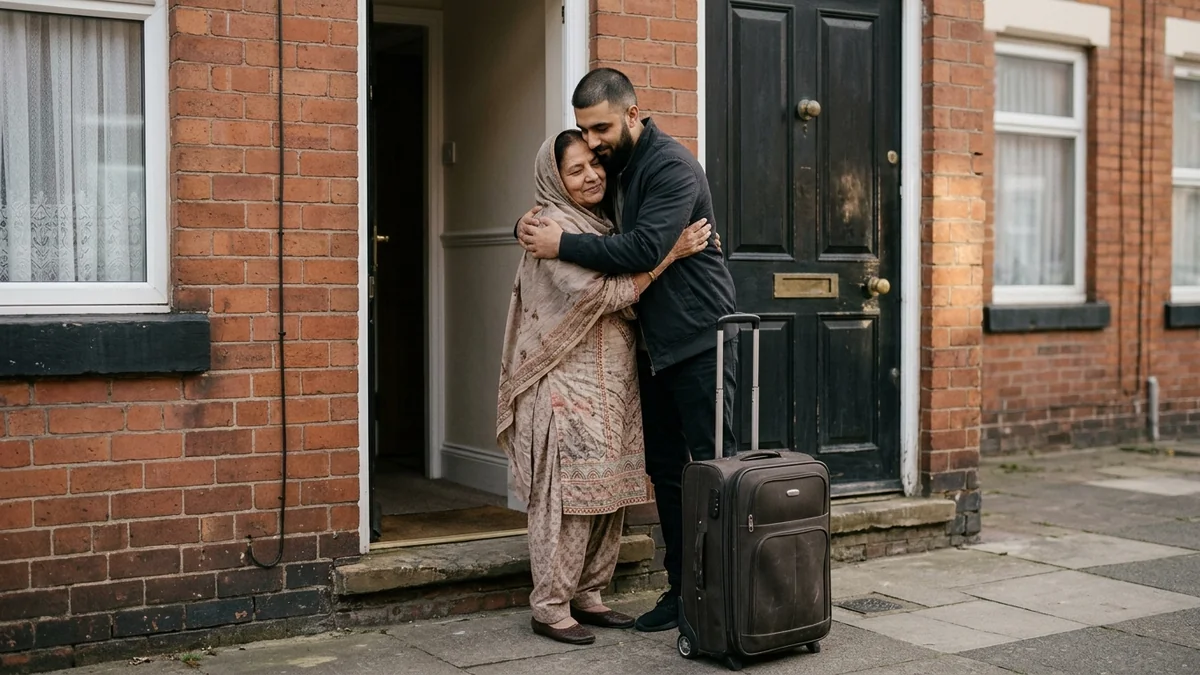
Packing for Umrah? Our Umrah checklist covers documents, clothing and what to keep in your hand luggage.
When you stop somewhere on the way
When you arrive at your hotel, or stop anywhere to rest, say this dua. The Prophet ﷺ said that whoever says it on stopping at a place will not be harmed by anything until he moves on from there.
أَعُوذُ بِكَلِمَاتِ اللَّهِ التَّامَّاتِ مِنْ شَرِّ مَا خَلَقَ
Transliteration: A’udhu bi-kalimatillahit-tammati min sharri ma khalaq.
Meaning: “I seek refuge in the Perfect Word of Allah from the evil of what He has created”
Reference: Sahih Muslim 2708a.
It suits every stop on an Umrah trip, from your hotel in Makkah to your hotel in Madinah.
Coming home after Umrah
On the way back, say the same travel dua. Ibn Umar reported that when the Prophet ﷺ returned, he said it with these words added:
آيِبُونَ تَائِبُونَ عَابِدُونَ لِرَبِّنَا حَامِدُونَ
Transliteration: Ayibuna, ta’ibuna, ‘abiduna, li-Rabbina hamidun.
Meaning: “We are returning, repentant, worshipping our Lord, and praising Him.”
Reference: Sahih Muslim 1342.
Returning from Hajj or Umrah, the Prophet ﷺ said “Allahu akbar” three times at every rise in the ground, and then:
لاَ إِلَهَ إِلاَّ اللَّهُ وَحْدَهُ لاَ شَرِيكَ لَهُ، لَهُ الْمُلْكُ، وَلَهُ الْحَمْدُ، وَهُوَ عَلَى كُلِّ شَىْءٍ قَدِيرٌ، آيِبُونَ تَائِبُونَ عَابِدُونَ سَاجِدُونَ لِرَبِّنَا حَامِدُونَ، صَدَقَ اللَّهُ وَعْدَهُ وَنَصَرَ عَبْدَهُ وَهَزَمَ الأَحْزَابَ وَحْدَهُ
Transliteration: La ilaha illallahu wahdahu la sharika lah, lahul-mulku wa lahul-hamd, wa huwa ‘ala kulli shay’in qadir. Ayibuna, ta’ibuna, ‘abiduna, sajiduna, li-Rabbina hamidun. Sadaqallahu wa’dah, wa nasara ‘abdah, wa hazamal-ahzaba wahdah.
Meaning: “None has the right to be worshipped but Allah; He is One and has no partner. All the kingdoms is for Him, and all the praises are for Him, and He is Omnipotent. We are returning with repentance, worshipping, prostrating, and praising our Lord. He has kept up His promise and made His slave victorious, and He Alone defeated all the clans of (nonbelievers)”
Reference: Sahih al-Bukhari 1797.
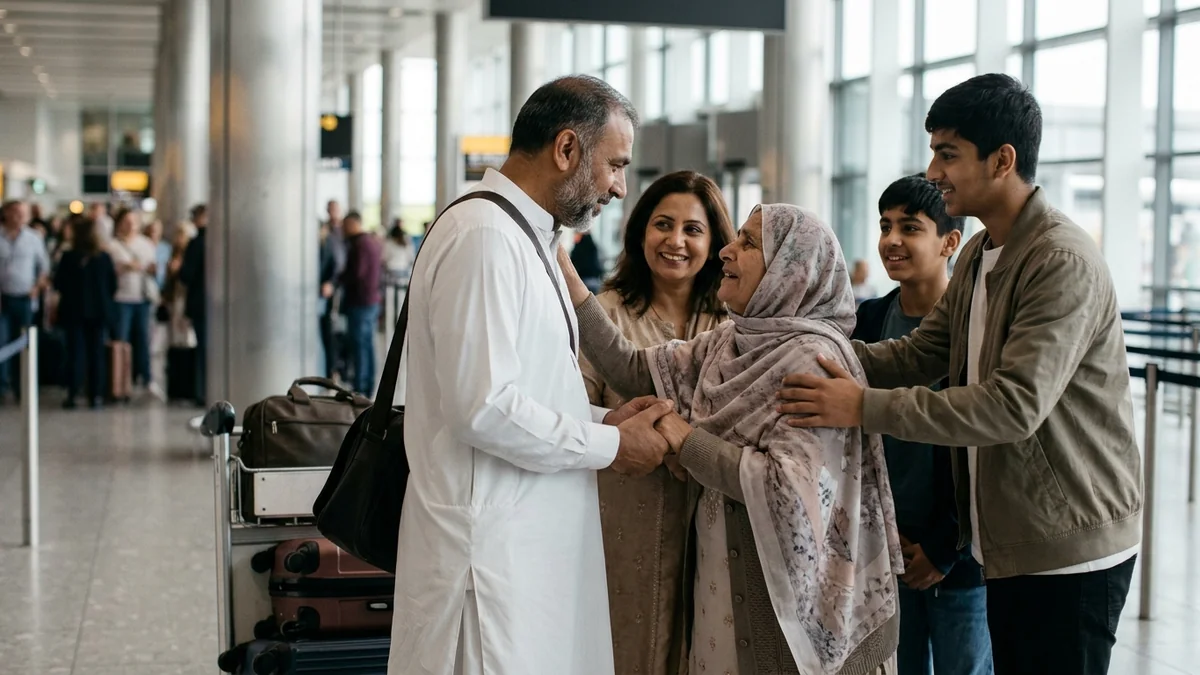
Still preparing? Our step-by-step guide on how to perform Umrah covers the rites between leaving and coming home.
When to say each dua on your Umrah journey
This table follows an Umrah trip from the UK, from your front door and back again. Use it as a reminder; each dua is given in full above.
| Moment | What to say | Reference |
|---|---|---|
| Leaving your front door | “Bismillah, tawakkaltu ‘alallah…”; family say “Astawdi’ullaha dinaka…” and “Zawwadakallahut-taqwa…” | Abi Dawud 5095, Tirmidhi 3443, 3444 |
| The drive to the airport | “Allahu akbar” three times, then the travel dua | Muslim 1342 |
| Seated on the plane | The travel dua, or the Quran lines if time is short | Muslim 1342, Quran 43:13–14 |
| Going up and coming down | “Allahu akbar” going up, “Subhan Allah” going down, as the hadith describes | Bukhari 2993 |
| The transfer from Jeddah or Madinah airport | The travel dua as the transfer sets off | Muslim 1342 |
| Arriving at your hotel | “A’udhu bi-kalimatillahit-tammati…” | Muslim 2708a |
| Between Makkah and Madinah | The travel dua, then the stopping dua at the new hotel | Muslim 1342, 2708a |
| Setting off home | The travel dua with “Ayibuna, ta’ibuna…” added | Muslim 1342 |
| On the way back | “Allahu akbar” three times at each rise, then “La ilaha illallahu wahdahu…” | Bukhari 1797 |
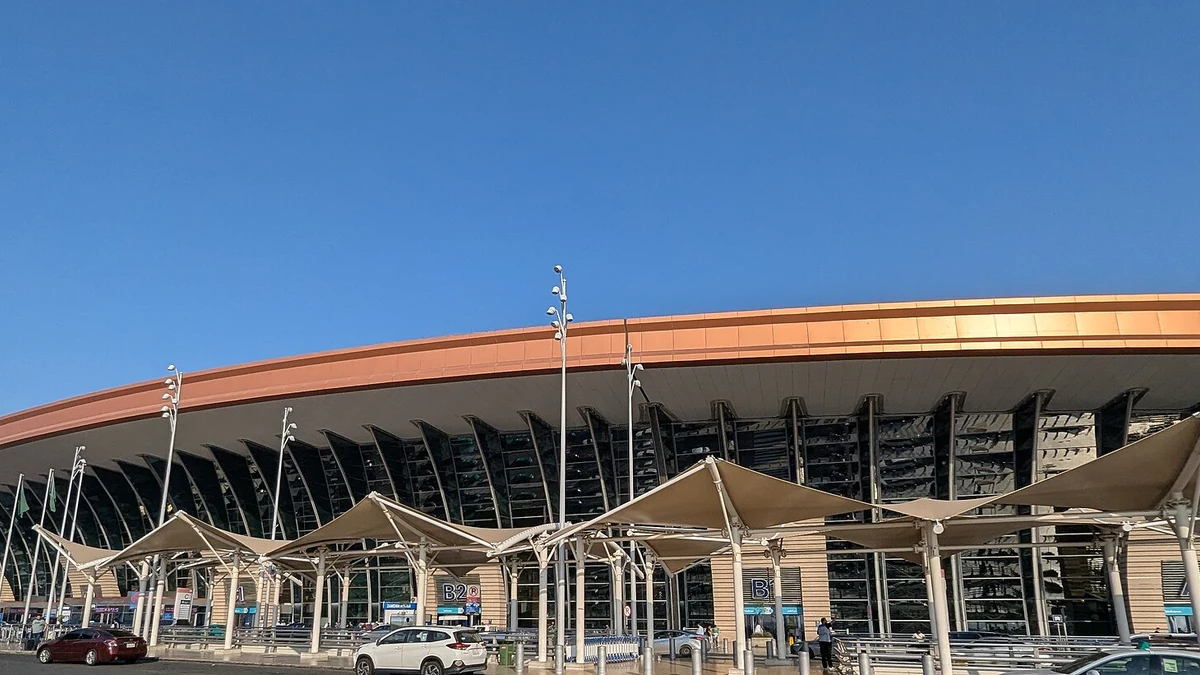
Travelling between the two cities by rail? Our guide to the Makkah to Madinah train explains that part of the trip.
Why make dua while you travel?
The Prophet ﷺ said that three supplications are answered without doubt, and one of them is the supplication of the traveller (Sunan Abi Dawud 1536, graded Hasan; Jami’ at-Tirmidhi 1905, graded Hasan). Your journey to Umrah is a time to ask Allah for yourself, your parents and the people you leave behind.
Travelling with parents or children? See our family Umrah packages.
Questions about the dua for travelling
Is there a transliteration of the dua for travelling?
Yes. Each dua in this guide gives the Arabic, a transliteration in English letters and the meaning, with a link to the hadith or verse it comes from. The transliteration helps you practise, and the Arabic text is copied from sunnah.com and quran.com so you can check it.
Do I say it every time I get in a car?
Ibn Umar reported that the Prophet ﷺ said it whenever he mounted his camel to set out on a journey (Sahih Muslim 1342). The sources in this guide set no rule for short everyday trips. If you are unsure, ask a scholar you trust.
Is the travel dua in the Quran?
Its opening lines are. “Subhanal-ladhi sakhkhara lana hadha…” and “wa inna ila Rabbina la-munqalibun” are Quran 43:13–14. The rest of the dua, asking for righteousness, an easy journey and protection for the family, comes from the hadith in Sahih Muslim 1342.
What do I say when I arrive somewhere to stay?
Say “A’udhu bi-kalimatillahit-tammati min sharri ma khalaq”, which sunnah.com translates as “I seek refuge in the Perfect Word of Allah from the evil of what He has created”. The Prophet ﷺ said that nothing would harm the person who says it until he leaves that place (Sahih Muslim 2708a).
What should I say when I get home from Umrah?
On the way back, say the travel dua and add “Ayibuna, ta’ibuna, ‘abiduna, li-Rabbina hamidun” (Sahih Muslim 1342). Returning from Hajj or Umrah, the Prophet ﷺ also said “Allahu akbar” three times at each rise and the words in Sahih al-Bukhari 1797.
Your next step
One dua covers the whole trip: say “Allahu akbar” three times, then the dua for travelling, whether you are in a car, on a plane or on a transfer coach. Add the farewell duas at the door, the stopping dua at each hotel and the return words on the way home.
Planning your Umrah from the UK? Send us your dates and ask for a written quote on WhatsApp, with every cost itemised, or compare our Umrah packages first.
Reviewed by Babul Haram Travels team · editorial review 24 November 2026. Sources checked on 24 November 2026. For a personal religious ruling, consult a qualified scholar.
Hadith from Sahih al-Bukhari and Sahih Muslim carry no separate grade on sunnah.com; the other hadith show the grade given there. Transliterations are our own rendering of the Arabic, except Jami’ at-Tirmidhi 3443 and 3444, which follow sunnah.com.
Photo sources: The Jeddah airport photograph is credited under the image. The other pictures in this guide are illustrations made for it with AI and do not show our customers.