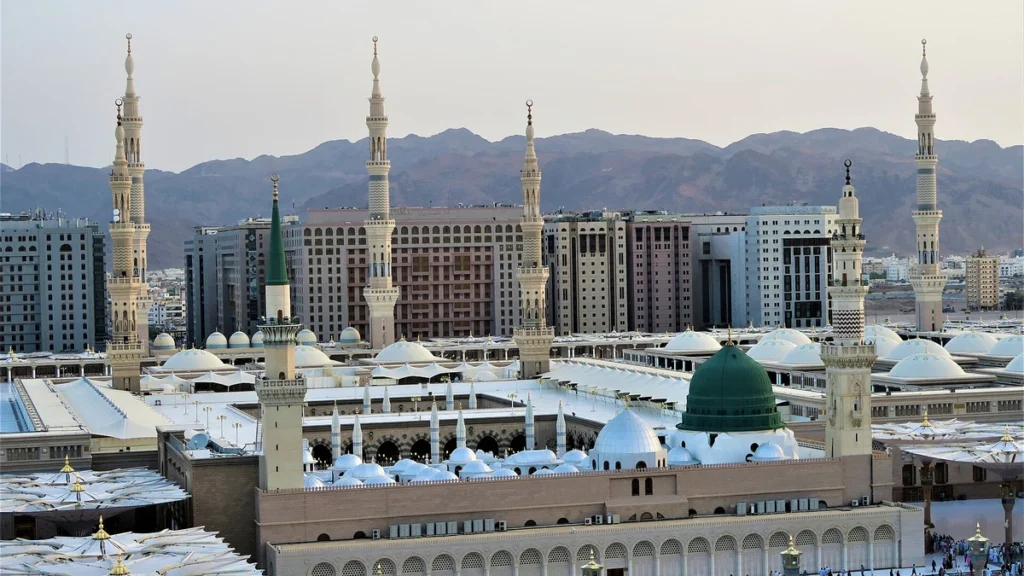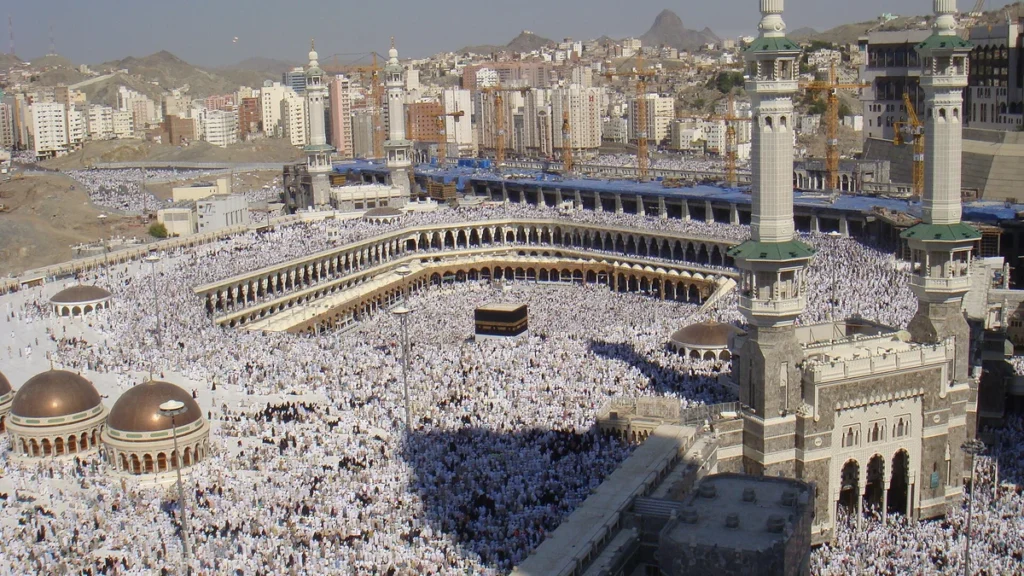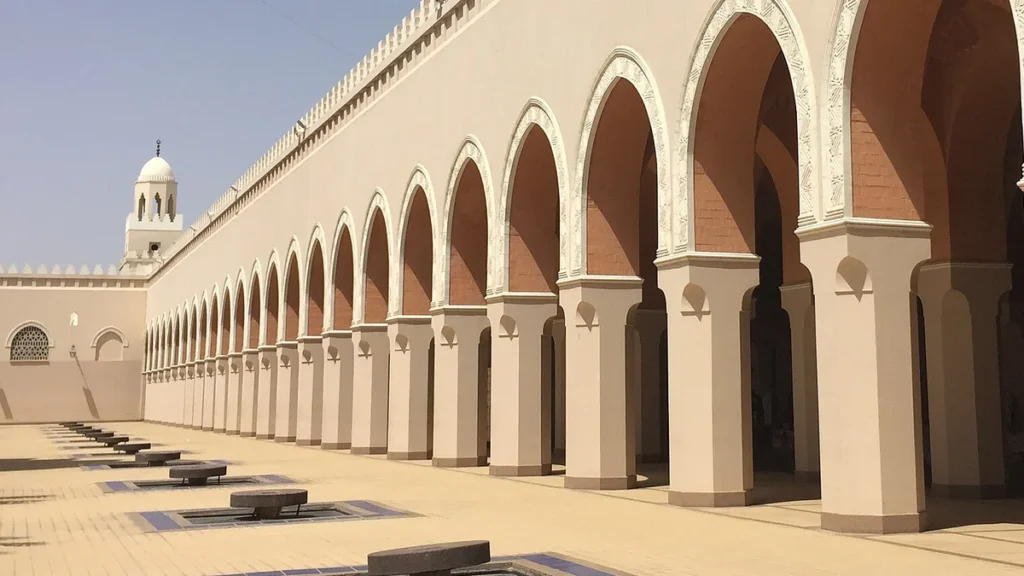
Ziyarat in Makkah means visiting places around the city linked to the life of the Prophet ﷺ and the first Muslims. They include Jabal al-Nour and the Cave of Hira, Jabal Thawr, Jannat al-Mu’alla, Masjid al-Jinn, Masjid Aisha, and the Hajj sites of Mina, Muzdalifah and Arafat. These visits are not part of Umrah.
This guide is for UK pilgrims planning their days in Makkah. For each place, it gives what happened there, with the verse or hadith linked, and where scholars differ, without a ruling of our own.
Guided ziyarat, with transport, is already part of every Babul Haram Travels package: see our Umrah packages, with guided ziyarat included.
Key takeaways
- A visit, not a rite: ziyarat is not part of Umrah. The scholars cited here do not count it as a Sunnah or an act of worship.
- Hira and Thawr: the first revelation came in the Cave of Hira. The Prophet ﷺ and Abu Bakr stayed three nights in the cave on Jabal Thawr.
- Jannat al-Mu’alla: Khadijah is buried here. The Prophet ﷺ taught a greeting for graves, and scholars differ on women visiting them.
- Plan around prayer and heat: keep your prayers in Masjid al-Haram first, avoid direct sun and drink enough fluids.
What ziyarat in Makkah means, and what it is not
Ziyarat means visiting: here, going to see the places around Makkah where events of the Prophet’s life ﷺ took place. It is not a rite of Umrah, and the scholars cited below do not count these visits as a Sunnah or an act of worship.
The rites are separate: see how to perform Umrah. You may also see the visits written as ziyarat in Mecca or Makkah ziyarat.
What scholars say:
- Not a Sunnah of Hajj or Umrah. A Hanafi mufti was asked if visiting the caves of Hira and Thawr has any special virtue. He answered: “This is not from among the Sunnat or Mustahab acts of Hajj or Umrah” (Mufti Online).
- Looking is not worship. Of the Cave of Hira, Shaykh Ibn Uthaymeen said the Prophet ﷺ “did not go back to it after that, and the Sahaabah did not visit it”. Climbing “to take a look only” is not denounced, he said, but going there to worship is (IslamQA 100274).
- Some say do not visit. Another answer says treating historical sites as “places which a person should visit” has no basis: “they should not be visited” (IslamQA 11669).
Scholars differ on making these visits at all, and this guide gives no ruling. If you are unsure, ask the guide or scholar travelling with your group. For Madinah, see the Rawdah and ziyarat in Madinah.
Keep the Haram first. One prayer in the Sacred Mosque “is better than one hundred thousand prayers elsewhere” (Sunan Ibn Majah 1406, Sahih, Darussalam). Plan visits between prayers.
The Makkah ziyarat places in this guide:
| Place | Where | Why it matters | Source |
|---|---|---|---|
| Jabal al-Nour and the Cave of Hira | North-east of Masjid al-Haram | The first revelation | Bukhari 3 |
| Hira Cultural District | Foot of Jabal al-Nour | The Revelation Exhibition | SPA |
| Jabal Thawr | South of Masjid al-Haram | The cave of the Hijrah | Bukhari 3905 |
| Masjid al-Jinn | In front of al-Mu’alla cemetery | Named after the Prophet’s ﷺ meeting with the jinn, per Visit Saudi | Visit Saudi; Muslim 450a |
| Jannat al-Mu’alla | Al-Hajun, below Jabal al-Sayyidah | Khadijah’s grave | Saudipedia |
| Masjid Aisha | Al-Tan’im, 7.5 km north | Aisha’s Umrah began here | Bukhari 1784 |
| Mina | Near Jamrat al-Aqabah | The al-Bay’ah Mosque | Saudipedia |
| Muzdalifah | Al-Mash’ar al-Haram | Where the Quran says to praise Allah | Quran 2:198 |
| Arafat | Jabal al-Rahmah | The standing of Hajj | Muslim 1218a |
Each section below gives the place’s history and its sources.
Jabal al-Nour and the Cave of Hira
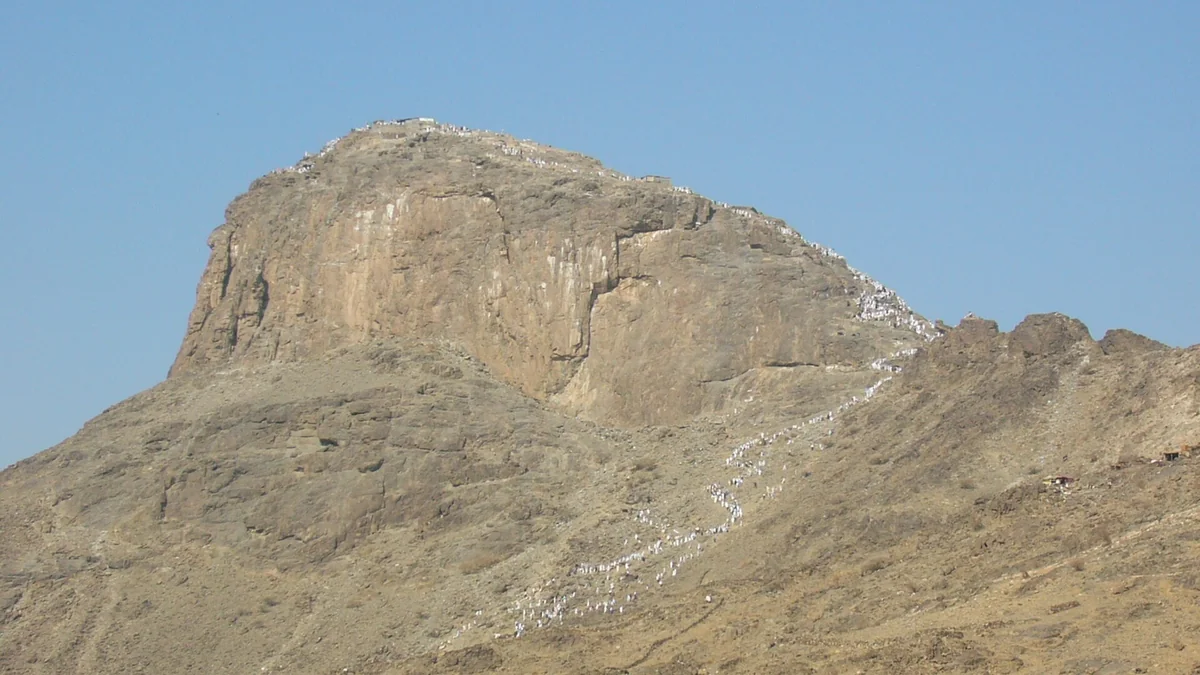
Jabal al-Nour, north-east of Masjid al-Haram, holds the Cave of Hira. The Prophet ﷺ used to go there in seclusion to worship, and it was there that the first revelation came to him (Sahih al-Bukhari 3).
Aisha reported that he worshipped in the cave “continuously for many days” before going back to his family. Then, while he was in the cave, “The angel came to him and asked him to read.” The first words revealed open Surah al-Alaq:
ٱقْرَأْ بِٱسْمِ رَبِّكَ ٱلَّذِى خَلَقَ
Transliteration: iq’ra bi-is’mi rabbika alladhī khalaqa
Meaning: “Read, ˹O Prophet,˺ in the Name of your Lord Who created—”
Reference: Quran 96:1 (meaning: Dr. Mustafa Khattab, The Clear Quran).
Saudipedia describes the cave as a hollow at the top of the mountain that can “accommodate only four or five people”. From the summit you can see over Makkah and its buildings (Saudipedia: Ghar Hira).
The way up is a real climb, and the mountain’s upper slopes are steep (Saudipedia: Jabal al-Nour). Visit Saudi advises planning a visit around “weather conditions, physical readiness, and current access guidance” (Visit Saudi). Daytime temperatures in Saudi Arabia, “even in the winter, can reach over 30°C” (NaTHNaC, checked 19 October 2026).
If you do climb, remember Ibn Uthaymeen’s distinction above: climbing to look is not denounced, but climbing to worship there is (IslamQA 100274).
The Hira Cultural District and the Revelation Exhibition
At the foot of Jabal al-Nour, the Hira Cultural District’s Revelation Exhibition retells the story of revelation. It recreates the Cave of Hira with interactive displays (Saudi Press Agency, 28 November 2025).
The district covers 67,000 square metres and also holds the Holy Quran Museum, gift shops and cafes. Opening hours are listed on the Revelation Exhibition’s own page: check the hours before you go (checked 19 October 2026).
The exhibition tells the cave’s story without the climb. That makes it one of the easier places to visit in Makkah for families with children or older parents.
Jabal Thawr and the cave of the Hijrah
Jabal Thawr, south of Masjid al-Haram, is the mountain where the Prophet ﷺ and Abu Bakr sheltered in a cave for three nights. That was at the start of the Hijrah, the migration to Madinah (Sahih al-Bukhari 3905).
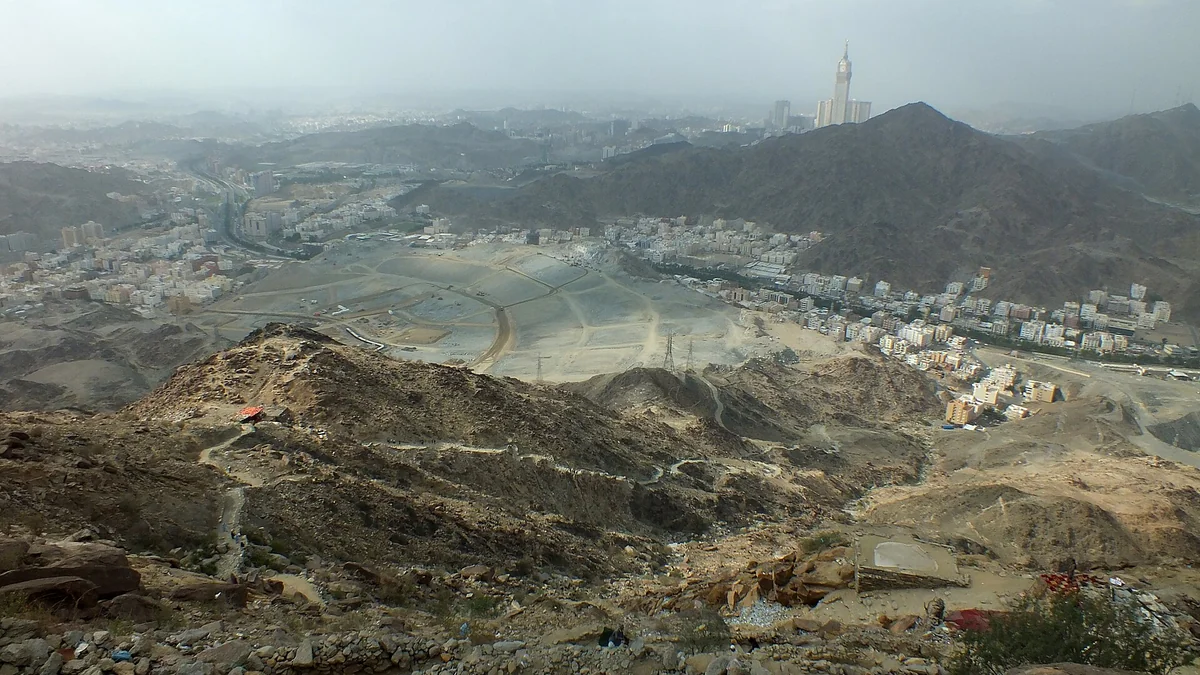
The Quran refers to this moment: “While they both were in the cave, he reassured his companion”, saying: “Do not worry; Allah is certainly with us.” (Quran 9:40, The Clear Quran).
Abu Bakr later described it. He told the Prophet ﷺ in the cave, “If any of them should look under his feet, he would see us.” The Prophet ﷺ answered, “O Abu Bakr! What do you think of two (persons) the third of whom is Allah?” (Sahih al-Bukhari 3653).
You may also hear that a spider spun its web across the entrance. That report is recorded in Musnad Ahmad, and “The scholars differed concerning this hadeeth”. Ibn Hajar and Ibn Kathir graded its chain hasan (sound); al-Albani graded it da’eef (weak) (IslamQA 27224).
A Hanafi hadith service also notes that both scholars “declared the chain of Musnad Ahmad as sound (hasan)” (Hadith Answers).
Saudipedia notes that the mountain was formerly called Jabal Athal and has “ten pointed peaks” (Saudipedia). Ibn Uthaymeen’s answer above covers this cave too: visiting it “is not Sunnah and is not an act of worship” (IslamQA 100274).
Masjid al-Jinn
Masjid al-Jinn stands in front of the al-Mu’alla cemetery and, according to Visit Saudi, is named after the place where the Prophet ﷺ met the jinn. It is also called Masjid al-Haras, and “Muslim visitors can visit it throughout the year” (Visit Saudi).
Ibn Mas’ud described a night when the Companions missed the Prophet ﷺ and searched for him. At dawn, “we saw him coming from the side of Hiri'”. He told them, “There came to me an inviter on behalf of the Jinn”, and said he had recited the Quran to them.
Then he showed them “their traces” (Sahih Muslim 450a). The hadith names no mosque: the link between that night and this site is the one Visit Saudi gives.
Surah al-Jinn also opens with “a group of jinn” who “listened ˹to the Quran,˺” (Quran 72:1). No source we checked ties that verse to this mosque.
Jannat al-Mu’alla
Jannat al-Mu’alla, also called al-Ma’la Cemetery, is Makkah’s historic cemetery. It lies north of Masjid al-Haram at the foot of Jabal al-Sayyidah, the mountain named after Khadijah bint Khuwaylid, who is buried here (Saudipedia).
Saudipedia calls it one of the oldest cemeteries in Makkah, dating back to before Islam. Among those buried there it names “Khadija bint Khuwaylid, Asmaa bint Abi Bakr, Al-Qasim, son of the Prophet” (Saudipedia: al-Ma’alah Cemetery).
The Prophet ﷺ used to teach his Companions what to say when they went out to the graveyard:
السَّلاَمُ عَلَيْكُمْ أَهْلَ الدِّيَارِ مِنَ الْمُؤْمِنِينَ وَالْمُسْلِمِينَ وَإِنَّا إِنْ شَاءَ اللَّهُ لَلَاحِقُونَ أَسْأَلُ اللَّهَ لَنَا وَلَكُمْ الْعَافِيَةَ
Transliteration: As-salāmu ʿalaykum ahla d-diyāri mina l-muʾminīna wa l-muslimīn, wa innā in shāʾa Allāhu la-lāḥiqūn, asʾalu Allāha lanā wa lakumu l-ʿāfiyah
Meaning: “Peace be upon you, the inhabitants of the city, among the believers, and Muslims, and God willing we shall join you. I beg of Allah peace for us and for you.”
Reference: Sahih Muslim 975 (meaning: sunnah.com’s English).
Women and graves. Scholars differ on whether women may visit graves. One answer holds that “it is not allowed for women to visit graves” (IslamQA 8198).
A Hanafi answer permits it with conditions, such as proper dress, no mixing with non-mahram men and no wailing. It quotes al-Fatawa al-Hindiyya: “The scholars differed about women visiting graves” (IslamQA.org, Hanafi).
We give no ruling: ask your own scholar. At the cemetery, follow any signs at the gate.
Masjid Aisha at al-Tan’im
Masjid Aisha, also called Masjid al-Taneem, stands 7.5 km north of Masjid al-Haram on the Makkah–Madinah road. It marks a boundary of the Haram, where people in Makkah enter ihram (Saudipedia).
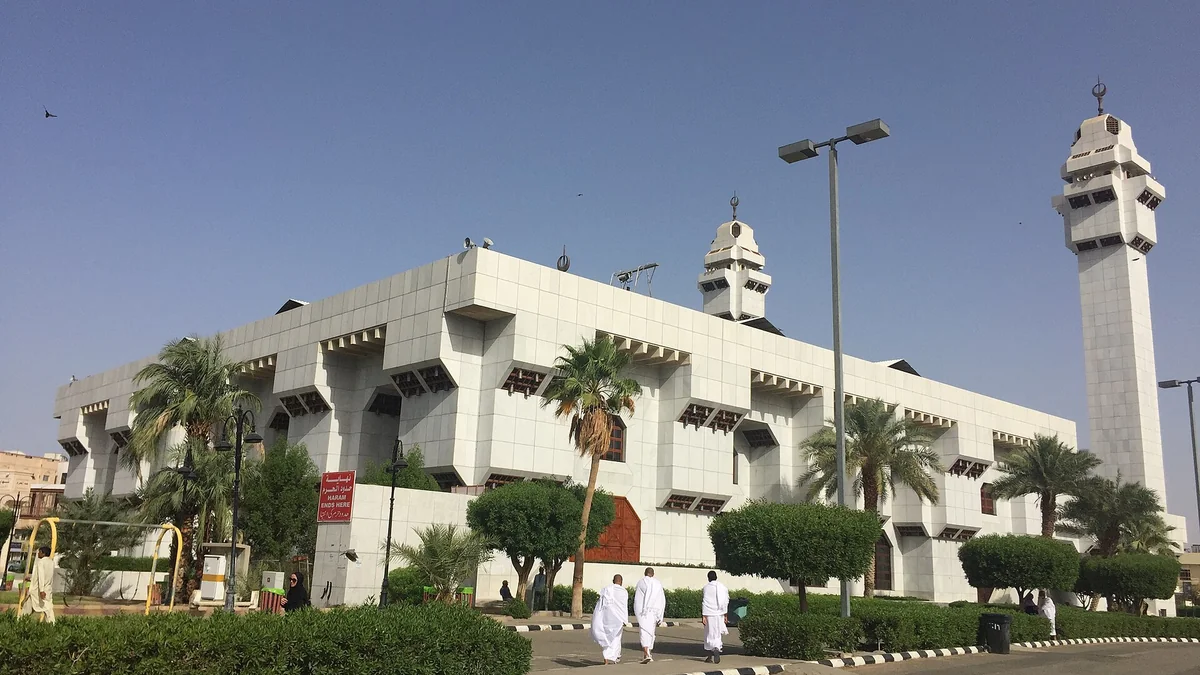
Saudipedia says the mosque was built where Aisha entered ihram for Umrah during the Farewell Pilgrimage. The Prophet ﷺ had told her brother, Abdur-Rahman ibn Abi Bakr, “to let ‘Aisha ride behind him and to make her perform ‘Umra from at-Tan‘im” (Sahih al-Bukhari 1784).
Today it holds 15,000 worshippers and is open all year, with parking for buses, taxis and cars nearby. People already in Makkah who make another Umrah enter ihram at a boundary such as this one, as Aisha did. Read our guide to ihram rules before you go.
Mina, Muzdalifah and Arafat
Mina, Muzdalifah and Arafat are the sites of Hajj, and Umrah has none of their rites. On a ziyarat you see the places where Hajj happens and where the Prophet ﷺ stood on his own Hajj (Sahih Muslim 1218a). For the rites, see the difference between Hajj and Umrah.
Mina and the al-Bay’ah Mosque
Mina is the valley of the Jamarat, where pebbles are thrown during Hajj. Near Jamrat al-Aqabah stands the al-Bay’ah Mosque, where the Ansar pledged allegiance to the Prophet ﷺ in the Pledge of Aqabah (Saudipedia).
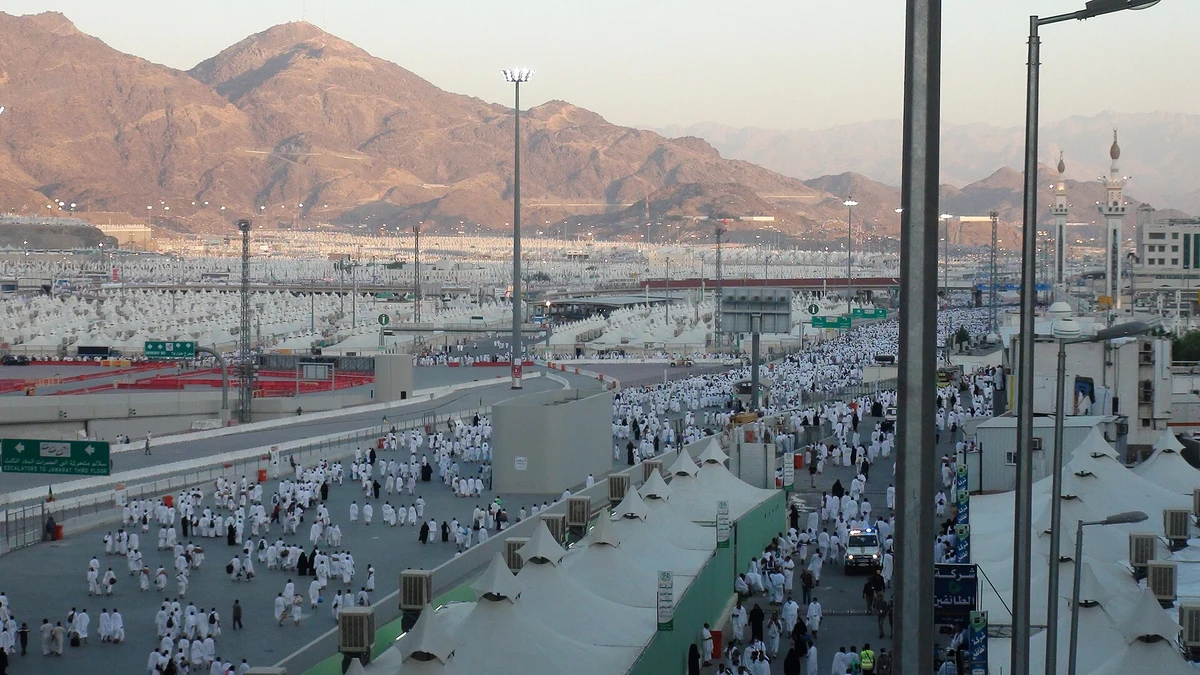
Saudipedia adds that the mosque “was built by Abu Ja’far al-Mansur in 761”. On the day of Tarwiya, the 8th of Dhu’l-Hijja, the Prophet ﷺ went to Mina and led the noon, afternoon, sunset, ‘Isha’ and dawn prayers there. After sunrise he set out for Arafat (Sahih Muslim 1218a).
Muzdalifah and al-Mash’ar al-Haram
Muzdalifah lies between Arafat and Mina. The Quran tells pilgrims returning from Arafat to “praise Allah near the sacred place” (Quran 2:198, The Clear Quran).
On his Hajj, the Prophet ﷺ spent the night at Muzdalifah. After the dawn prayer he “came to al-Mash’ar al-Haram, he faced towards Qibla, supplicated Him”, and kept standing “till the daylight was very clear” (Sahih Muslim 1218a).
Arafat and Jabal al-Rahmah
Arafat is the plain where pilgrims stand on the Day of Arafah. On his Hajj, the Prophet ﷺ stood by the rocks of Mount ‘Arafah, the hill visitors know as Jabal al-Rahmah.
The same hadith says a tent was “pitched at Namira”. He “came to the bottom of the valley, and addressed the people”. Then he faced the Qibla by the rocks and stood there “till the sun set” (Sahih Muslim 1218a).
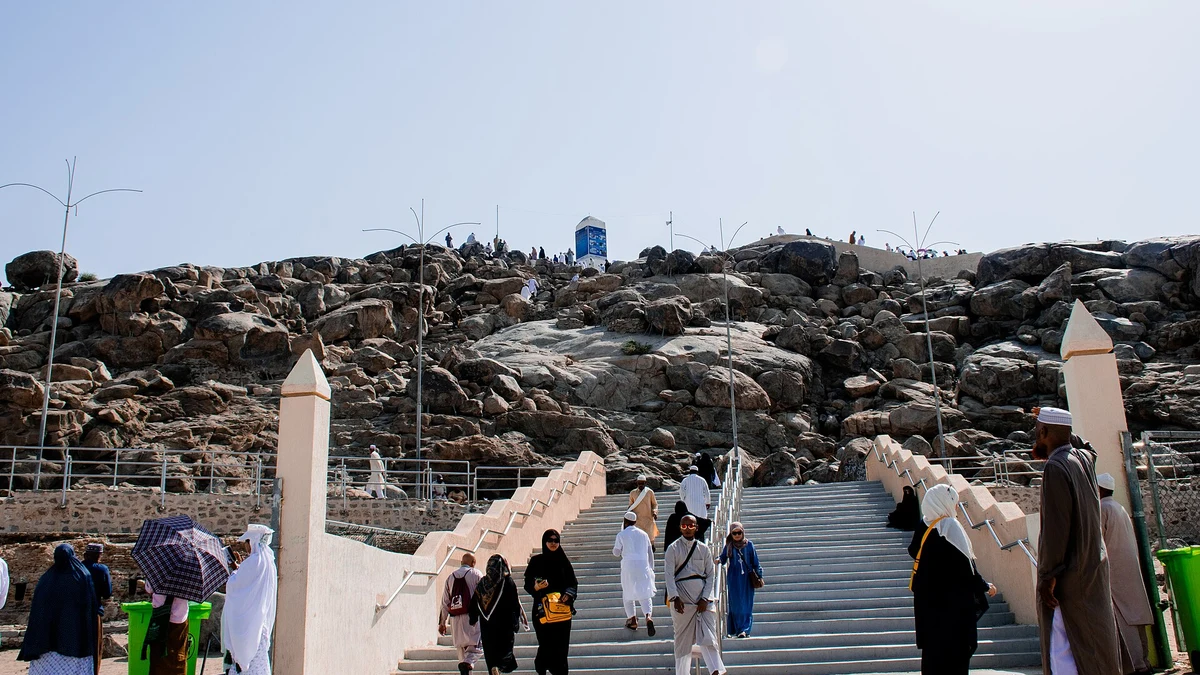
Shaykh Ibn Uthaymeen was asked about pilgrims who visit this hill before or after Hajj and pray at its summit. He said that going there “to pray there and to touch it for blessings” is “bid’ah (an innovation)”.
He added that “there is nothing special about this mountain, apart from the fact that it is Sunnah to stand there on the day of ‘Arafah by the rocks”. He quoted the Prophet ﷺ: “I stood here but all of ‘Arafah is the place of standing.” (IslamQA 32846).
Planning your ziyarat in Makkah
Guided ziyarat in both Makkah and Madinah, with transport, is included in every Babul Haram Travels package from the UK. Each group also has a guide or scholar who helps with the rites. You do not need to book a separate Makkah ziyarat tour.
In Makkah, the included ziyarat visits Jabal al-Nour, Jabal Thawr, Mina and Arafat. Groups stop at the foot of the mountains rather than climbing them.
Visit Saudi notes that “Rather than attempting to visit many locations in a short time, visitors often choose to include a small number of key sites” (Visit Saudi). When you choose places to visit in Makkah during Umrah, a few that matter to you are enough.
- Go early and stay out of the sun. Saudi Arabia advises pilgrims to “avoid direct sun exposure” and “drink enough fluids” (NaTHNaC, checked 19 October 2026).
- Fit visits between prayers. Keep your prayers in Masjid al-Haram first.
- Check hours and access. Opening times, such as the Revelation Exhibition’s, and access to the mountains can change.
- Ask your guide. From the history of each place to what scholars say, the guide or scholar with your group can help.
To see what each package includes, compare our Umrah packages, or ask us for a written quote with every cost itemised.
Questions UK pilgrims ask about ziyarat
How many ziyarat places are there in Makkah?
There is no fixed list. Saudipedia lists eight Islamic historical sites in Makkah, and online guides name anywhere from 8 to 25 places, some counting Madinah too. This guide covers nine, from the caves of Hira and Thawr to Mina, Muzdalifah and Arafat.
Is there a special reward for ziyarat?
No source we checked gives one. A Hanafi mufti and Ibn Uthaymeen both say visiting the caves of Hira and Thawr is not a Sunnah. Some scholars say not to visit at all, while prayer in Masjid al-Haram does carry a stated reward (Sunan Ibn Majah 1406).
Can families with children or older parents do ziyarat?
Yes, with planning: the mosques and the Hajj sites at Mina, Muzdalifah and Arafat need no climb. The Revelation Exhibition tells the Cave of Hira’s story at ground level. Both caves are up on their mountains, so plan for “physical readiness” and the heat.
Does ziyarat in Makkah cost extra?
Not with Babul Haram Travels. Guided ziyarat in both Makkah and Madinah, with transport, is included in every package, along with a group guide or scholar. Your written quote itemises every cost before you pay anything.
Your next step
Ziyarat in Makkah is a visit, not a rite. The places tell the story of the first revelation, the Hijrah and the Prophet’s Hajj ﷺ, but none is part of Umrah. The sources we checked report no special reward for the visits.
Where scholars differ, ask a scholar you trust. Guided ziyarat is already in every one of our Umrah packages, so you can fit the visits around your prayers in the Haram.
Planning your Umrah from the UK? Send us your dates and we will come back with a written quote, every cost itemised. Message Babul Haram Travels on WhatsApp, or compare our Umrah packages first.
Reviewed by Babul Haram Travels team · editorial review 22 October 2026. Opening hours, access and travel advice can change: check the linked official pages for your dates. For a personal religious ruling, consult a qualified scholar.
Hadith from Sahih al-Bukhari and Sahih Muslim carry no separate grade on sunnah.com; the Sunan Ibn Majah hadith shows sunnah.com’s grade.
Photo sources: Location photographs are credited under each image and do not show our customers or a particular booking. Featured photo: Jabal al-Nour in Makkah (photographed 2007), resized and cropped for this guide; photo by Wal N., CC BY 2.0.