What is Tawaf? Tawaf is walking around the Kaaba in Makkah seven times as an act of worship, keeping the Kaaba on your left and starting and ending each circuit at the Black Stone corner. It is a pillar of Umrah and of Hajj, and you can also perform it on its own as a voluntary act.
This guide explains what the word means, why Muslims perform Tawaf, its six types and the rules that make it valid. Every verse and hadith is linked to its source. Where scholars differ, we say whose view each is and give no ruling of our own.
You will not be on your own in Makkah. Every one of our Umrah packages includes a group guide or scholar who helps with the rites, Tawaf included.
Key takeaways
- Seven circuits: the Kaaba stays on your left, and each circuit starts and ends at the Black Stone corner.
- Six types: the Tawaf of Umrah, of arrival (Qudum), al-Ifadah, the farewell (Wada), a vowed Tawaf and a voluntary one.
- Wudu: the majority of scholars make it a condition. Abu Hanifah’s view differs.
- Afterwards: pray two rak’ahs (units of prayer) behind Maqam Ibrahim if you can.
What is Tawaf in Islam? The meaning of the word
Tawaf means circling. In Islam, the word names the act of walking around the Kaaba as worship. The Quran uses the same word when it tells pilgrims to circle the Ancient House.
If you need to define Tawaf in one line: seven complete circuits of the Kaaba, made as an act of worship (IslamQA 253569). The Tawaf meaning in the Quran comes from this verse about the rites of Hajj:
ثُمَّ لْيَقْضُوا۟ تَفَثَهُمْ وَلْيُوفُوا۟ نُذُورَهُمْ وَلْيَطَّوَّفُوا۟ بِٱلْبَيْتِ ٱلْعَتِيقِ
Transliteration: thumma l’yaqḍū tafathahum walyūfū nudhūrahum walyaṭṭawwafū bil-bayti l-ʿatīqi
Meaning: “Then let them groom themselves, fulfil their vows, and circle the Ancient House.”
Reference: Quran 22:29 (meaning: Dr. Mustafa Khattab, The Clear Quran).
The Kaaba is called the House in these verses. Quran 2:125 tells how Allah entrusted Abraham and Ishmael to “purify My House for those who circle it” (Quran 2:125).
So what is a Tawaf in practice? It is seven circuits, each starting and ending at the Black Stone corner.
Do not confuse Tawaf with Sa’i, even though the Quran uses the same verb for walking between the hills of Safa and Marwah (Quran 2:158). That is why Ibn Umar’s report of the Umrah of the Prophet ﷺ calls that walk “Tawaf between Safa and Marwa” (Sahih al-Bukhari 1623). Sa’i is a separate rite, done after the Tawaf of Umrah.
Why do Muslims perform Tawaf?
Muslims perform Tawaf because the Quran commands it and the Prophet ﷺ performed it and taught it as part of Hajj and Umrah. The command in Quran 22:29 comes with the rites of Hajj.
The House and Ibrahim. Allah entrusted Abraham and Ishmael (Ibrahim and Ismail) to purify His House, and the first people the verse names are “those who circle it” (Quran 2:125).
Following the Prophet ﷺ. He kept the Kaaba on his left and said: “Learn from me your rituals [of Hajj]” (narrated by Muslim, 1297, as quoted in IslamQA 253569).
Umar kissed the Black Stone and said: “I know that you are a stone and can neither benefit anyone nor harm anyone”. He kissed it only because he had seen the Prophet ﷺ do so (Sahih al-Bukhari 1597). The worship is for Allah, not the stone.
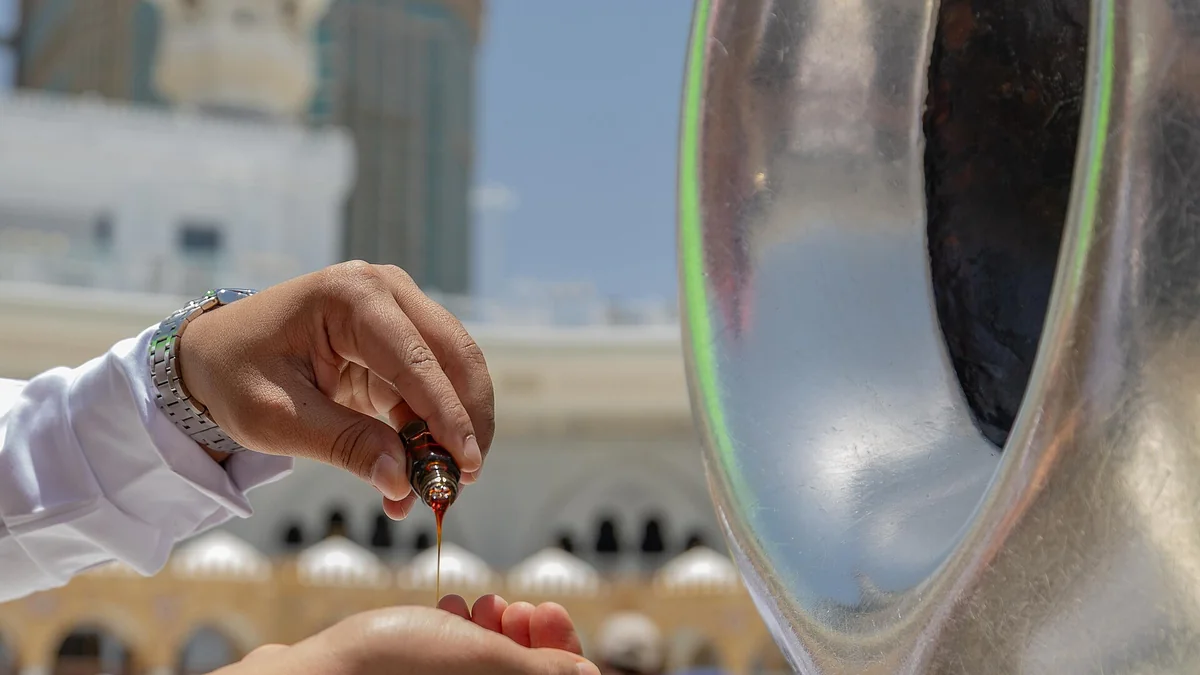
The reward. The Prophet ﷺ said: “Whoever performs Tawaf around this House seven times and he keeps track of it, then it is as if he freed a slave” (Jami’ at-Tirmidhi 959, Hasan, Darussalam).
You may also see a report about fifty circuits wiping away sins. Sunnah.com gives Darussalam’s grade for it: Da’if, meaning weak (Jami’ at-Tirmidhi 866).
How is Tawaf performed?
You walk seven circuits around the Kaaba with the Kaaba on your left, starting and ending each circuit at the Black Stone corner. The essentials (IslamQA 253569):
- Seven complete circuits. “If even one step is missing from the seven, then tawaf is not complete.”
- Anticlockwise. Keeping the Kaaba on your left means you walk anticlockwise.
- Start at the Black Stone. Kiss or touch it if you can do so without harming anyone. If not, point to it, as the Prophet ﷺ did each time he passed it on his camel (Sahih al-Bukhari 1613).
- Go round outside the Hijr, the low, curved wall beside the Kaaba. Aisha asked if it was part of the Kaaba, and the Prophet ﷺ “replied in the affirmative” (Sahih al-Bukhari 1584).
- Any floor of the mosque. Tawaf inside al-Masjid al-Haram is valid “whether on the upper or lower floors”. Upper-floor circuits are longer.
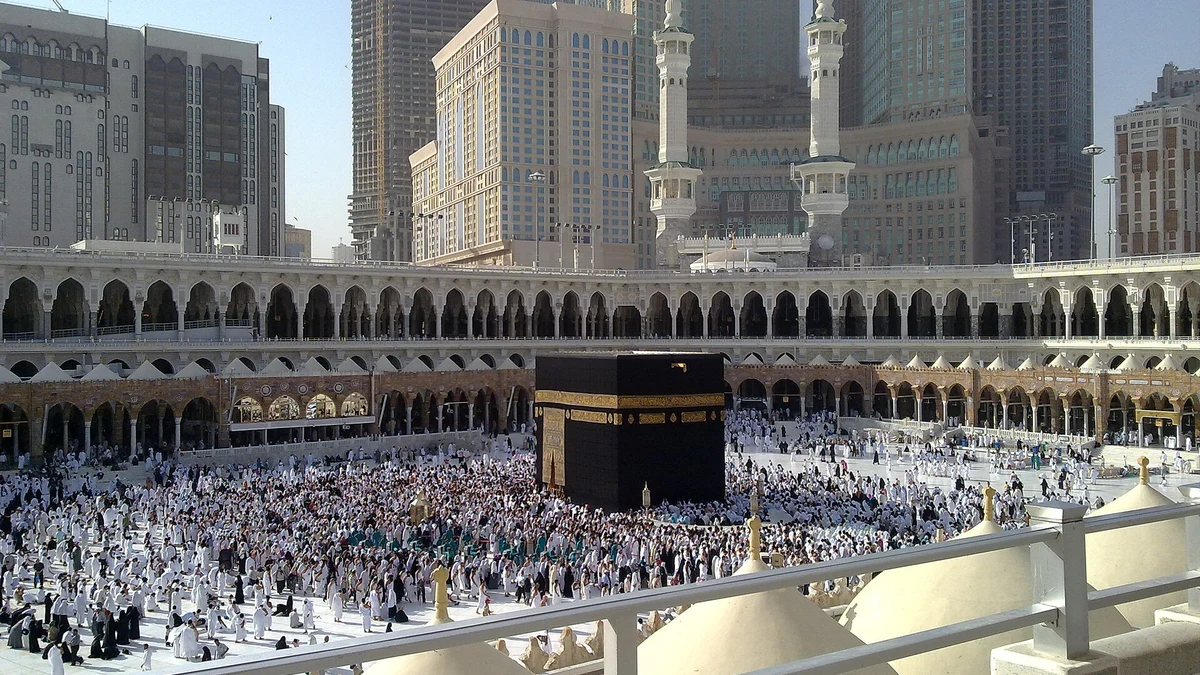
In the Tawaf of Umrah and of arrival, men also do ramal, walking quickly with short steps, and idtiba, uncovering the right shoulder. No source we checked gives a fixed time for Tawaf: it depends on the crowd and the floor.
For what to say on the way round, see our duas for Umrah, including during Tawaf. For every step in order, read how to perform Umrah, step by step. Two rak’ahs follow the seventh circuit.
What are the types of Tawaf?
There are six types of Tawaf: the Tawaf of Umrah, the Tawaf of arrival (Qudum), Tawaf al-Ifadah, the farewell Tawaf (Wada), a vowed Tawaf and voluntary Tawaf (IslamQA 106598). “Each of these tawafs must include seven circuits”, followed by two rak’ahs.
| Type | When | Hajj or Umrah | Ruling | Ramal and idtiba (men) |
|---|---|---|---|---|
| Tawaf of Umrah | After entering Ihram (the pilgrim’s sacred state) | Umrah | Pillar: Umrah is not valid without it | Yes |
| Qudum (arrival) | On reaching the Kaaba | Hajj (ifrad or qiran) | Scholars differ: obligatory or Sunnah; recommended in the four Sunni schools | Yes |
| Ifadah | After Arafah, on the day of al-Adha or later | Hajj | Pillar of Hajj | No |
| Wada (farewell) | Before leaving Makkah | Hajj; after Umrah it is Sunnah | Hajj: obligatory in the more correct opinion, except women in menses; schools differ | No |
| Vowed | When you have vowed it | Either | Obligatory because of the vow | No |
| Voluntary | Any time | Neither | Voluntary | No |
The four Sunni schools name three Hajj Tawafs: Qudum, Ifadah and Wada. The Shia (Imamiyyah) school adds a fourth, Tawaf al-Nisa’, which it holds obligatory (The Five Schools of Islamic Law). For Hajj in context, see the difference between Hajj and Umrah.
The Tawaf of Umrah
The Tawaf of Umrah is a pillar of Umrah: your Umrah is not valid without it (IslamQA 106598). It is your next step after entering Ihram (The Five Schools of Islamic Law). Two rak’ahs and Sa’i follow, as in the Prophet’s ﷺ own Umrah (Sahih al-Bukhari 1623).
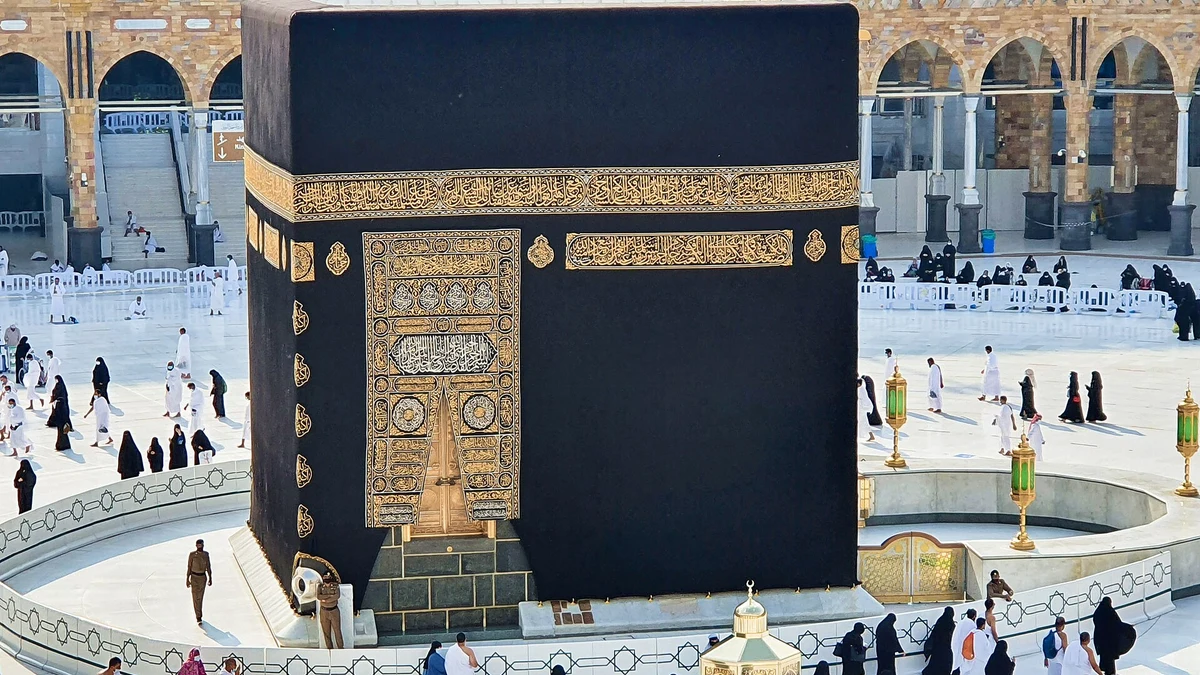
Men do ramal and idtiba in this Tawaf. The Prophet ﷺ and his Companions did both in their Umrah from al-Ji’ranah (Sunan Abi Dawud 1884, Sahih, Al-Albani; also IslamQA 42153). Read how to perform Umrah for the full steps and the rules of Ihram for what to wear.
Tawaf al-Qudum: the Tawaf of arrival
Tawaf al-Qudum is the Tawaf of arrival, done on reaching the Kaaba by pilgrims in Ihram for Hajj, or for Hajj and Umrah together (qiran). On reaching Makkah, the Prophet ﷺ first made wudu, then did Tawaf (Sahih al-Bukhari 1614), with ramal in its first three rounds (Sahih al-Bukhari 1644).
Scholars differ on whether it is obligatory or Sunnah (IslamQA 106598). The four Sunni schools hold it recommended, and the Malikis require a sacrifice if it is missed (The Five Schools of Islamic Law).
Tawaf al-Ifadah (Tawaf al-Ziyarah)
Tawaf al-Ifadah is a pillar of Hajj, performed after the standing at Arafah, on the day of al-Adha or after it (IslamQA 106598). All the schools count it an essential part of Hajj (The Five Schools of Islamic Law).
It has no ramal and no uncovering of the shoulder (IslamQA 42153). For Hajj in context, see how Hajj differs from Umrah.
Tawaf al-Wada: is the farewell Tawaf needed after Umrah?
In Hajj, the farewell Tawaf is the last thing pilgrims do before leaving Makkah. After Umrah, the Standing Committee’s answer is that it is Sunnah, not obligatory (IslamQA 109282).
In Hajj, people were ordered to make Tawaf their last act before leaving Makkah, and menstruating women were excused (Sahih al-Bukhari 1755). IslamQA holds it obligatory in the more correct of two opinions (IslamQA 106598). The Hanafis and Hanbalis hold it obligatory, the Malikis recommended, and al-Shafi’i has two opinions (The Five Schools of Islamic Law).
After Umrah, another Committee answer calls it prescribed, “but that is not obligatory according to the more correct of the two scholarly opinions” (IslamQA 109305). So another opinion exists: ask your group guide or scholar which to follow.
Voluntary Tawaf and a Tawaf vowed to Allah
You can perform a voluntary Tawaf whenever you are at the Kaaba, without Ihram and without Sa’i afterwards. Men do no ramal or idtiba in it (The Nafl Tawaf, a Hanafi guide).
It is still seven circuits and two rak’ahs, which the Hanafi school holds wājib, a duty. If you owe a higher-ranking Tawaf, such as your Umrah’s, do that first.
A vowed Tawaf is one you promised Allah: “It is obligatory because of the vow” (IslamQA 106598).
What are the conditions of Tawaf?
For Tawaf to count, scholars list conditions such as intention, purity, covering the awrah and seven complete circuits with the Kaaba on your left. IslamQA calls these “some of the conditions of tawaf” (IslamQA 253569):
- being Muslim and of sound mind;
- making the intention for Tawaf;
- covering the awrah, the parts of the body that must be covered;
- being in a state of purity (see wudu below);
- seven complete circuits, one after another, with the Kaaba on your left;
- walking if you are able: the majority view, “apart from the Shafi`is”.
IslamQA adds these rules of Tawaf: start at the Black Stone, go round the whole Kaaba (outside the Hijr) and stay inside the mosque. For Ihram clothing, see the rules of Ihram.
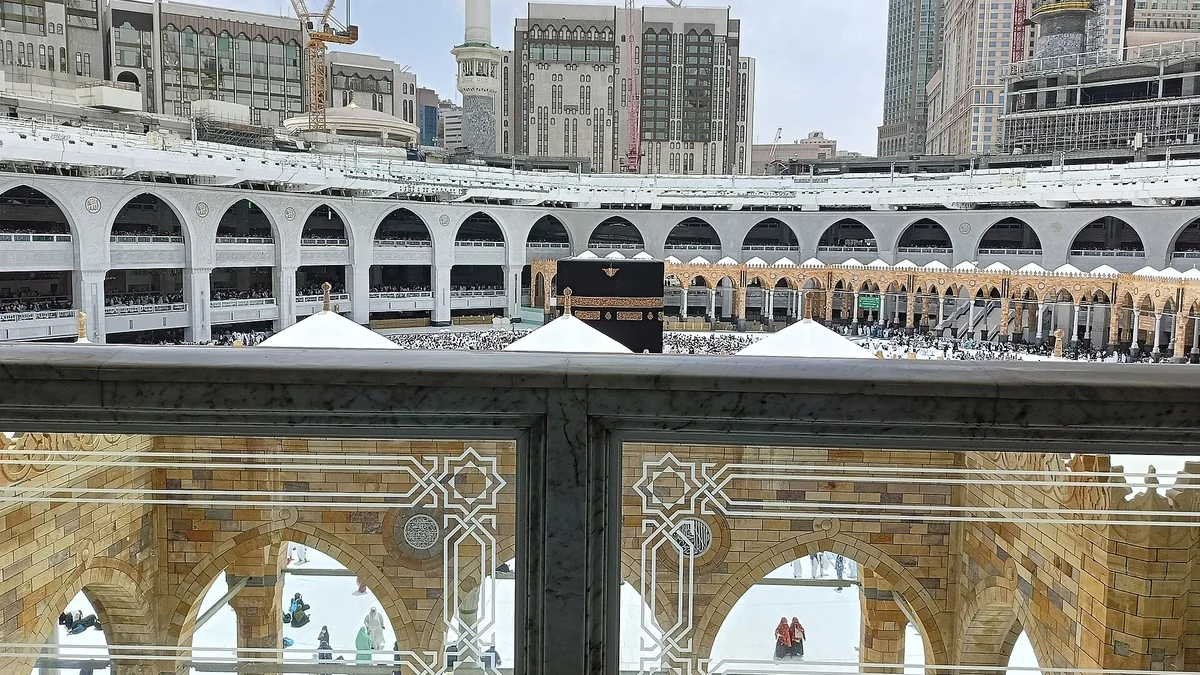
A point of difference, not a dispute. Scholars differ on some of these conditions, such as purity and walking. We name whose view each is; for a personal ruling, ask a qualified scholar.
Do you need wudu for Tawaf?
The majority of scholars say yes: wudu is a condition of Tawaf, as it is of prayer. Abu Hanifah held that it is not a condition, and Ibn Taymiyah favoured that view (IslamQA 34695).
Ibn Qudamah named it the view of Ahmad, Malik and al-Shafi’i. For the Hanafis it is an obligation that a sacrifice can make up (The Five Schools of Islamic Law).
The Prophet ﷺ made wudu before his first Tawaf (Sahih al-Bukhari 1614). The majority also cite this hadith:
“Tawaf around the House is similar to Salat except that you talk during it. So whoever talks in it, then let him not say but good.”
Reference: Jami’ at-Tirmidhi 960, graded Hasan (Darussalam) (English: sunnah.com).
The other side holds that these are the words of Ibn Abbas, not the Prophet’s ﷺ (IslamQA 34695). In practice, make wudu before you start; if it breaks, see the FAQ below.
Can you do Tawaf during your period?
A woman can enter Ihram during her period, but her Tawaf waits until the period has ended and she has done ghusl, the full bath (IslamQA 49992). Aisha, whose period began on the way to Hajj, was told to do every rite except Tawaf until she was clean (Sahih al-Bukhari 305).
One case of necessity is on record. A woman in Ihram for Umrah got her period in Makkah; her mahram had to leave at once, and she had no one there. For her, the Standing Committee said the purity condition “is waived in her case, out of necessity” (IslamQA 112271).
Plan spare days, and talk to your group guide or scholar.
After Tawaf: two rak’ahs behind Maqam Ibrahim
After the seventh circuit you pray two rak’ahs behind Maqam Ibrahim if you can, or anywhere else in the mosque (IslamQA 106598). The Prophet ﷺ did so in his Umrah (Sahih al-Bukhari 1623). The verse behind the practice:
وَٱتَّخِذُوا۟ مِن مَّقَامِ إِبْرَٰهِـۧمَ مُصَلًّى
Transliteration: wa-ittakhidhū min maqāmi ib’rāhīma muṣallan
Meaning: ““˹You may˺ take the standing-place of Abraham as a site of prayer.””
Reference: Quran 2:125 (meaning: Dr. Mustafa Khattab, The Clear Quran).
The schools differ. These rak’ahs are obligatory for the Maliki, Hanafi and Imamiyyah schools and recommended for the Shafi’i and Hanbali (The Five Schools of Islamic Law). Next come Zamzam water and Sa’i, set out in our step-by-step Umrah guide.
Tawaf: frequently asked questions
Can you do Tawaf without Umrah?
Yes: you can do a voluntary Tawaf whenever you are at the Kaaba. A Hanafi guide says it needs no Ihram and no Sa’i afterwards (The Nafl Tawaf). It is still seven circuits and two rak’ahs (IslamQA 106598); if you still owe your Umrah’s Tawaf, do that first.
Do you need to wear Ihram for Tawaf?
For the Tawaf of Umrah, yes: Tawaf is the next step after entering Ihram (The Five Schools of Islamic Law). A voluntary Tawaf has no Ihram condition (The Nafl Tawaf). Either way, cover your awrah (IslamQA 253569); see the rules of Ihram for what to wear.
What happens if your wudu breaks during Tawaf?
Asked by a pilgrim doing Umrah, IslamQA said renewing wudu and repeating the Tawaf is “better and more on the safe side” (IslamQA 34695). In severe crowding, the same answer says a pilgrim may be compelled to follow Ibn Taymiyah’s view that wudu is not essential. Ask your group guide or scholar.
Why is Tawaf done anticlockwise?
Because the Prophet ﷺ kept the Kaaba on his left, and walking with the Kaaba on your left takes you anticlockwise. He said: “Learn from me your rituals [of Hajj].” (Narrated by Muslim, as quoted in IslamQA 253569.)
Where does Tawaf start and end?
At the Black Stone corner. An-Nawawi wrote that each circuit starts and ends at the Black Stone (IslamQA 253569). If you cannot reach it, point to it as you pass, as the Prophet ﷺ did on his camel (Sahih al-Bukhari 1613).
Can you do Tawaf in a wheelchair?
Yes, if needed. Ibn Uthaymin did not allow riding or a wheelchair “unless there is a need for that”, such as sickness, old age or severe crowding (IslamQA 253569). The Prophet ﷺ told Umm Salama, who was ill, to do Tawaf riding behind the people (Sahih al-Bukhari 1619).
Can you do Tawaf with shoes on?
“It is permissible to do tawaf wearing shoes if they are clean” (IslamQA 161709). The same answer says it is better not to, so that careless people do not copy you. The question was about a Hajj Tawaf; the answer is general.
Tawaf in short
So, what is Tawaf? It is seven circuits of the Kaaba, made as an act of worship. Its type decides its ruling, and on some points the schools differ, so ask a qualified scholar for a personal ruling.
Planning your Umrah from the UK? Every package includes a group guide or scholar who helps with the rites.
Ask for a written quote on WhatsApp: send us your dates and we will come back with every cost itemised. Or compare our Umrah packages, from 3-star and 4-star to 5-star packages.
Reviewed by Babul Haram Travels team · editorial review 23 October 2026.
Sahih al-Bukhari hadith carry no separate grade on sunnah.com; other grades are as sunnah.com shows them.
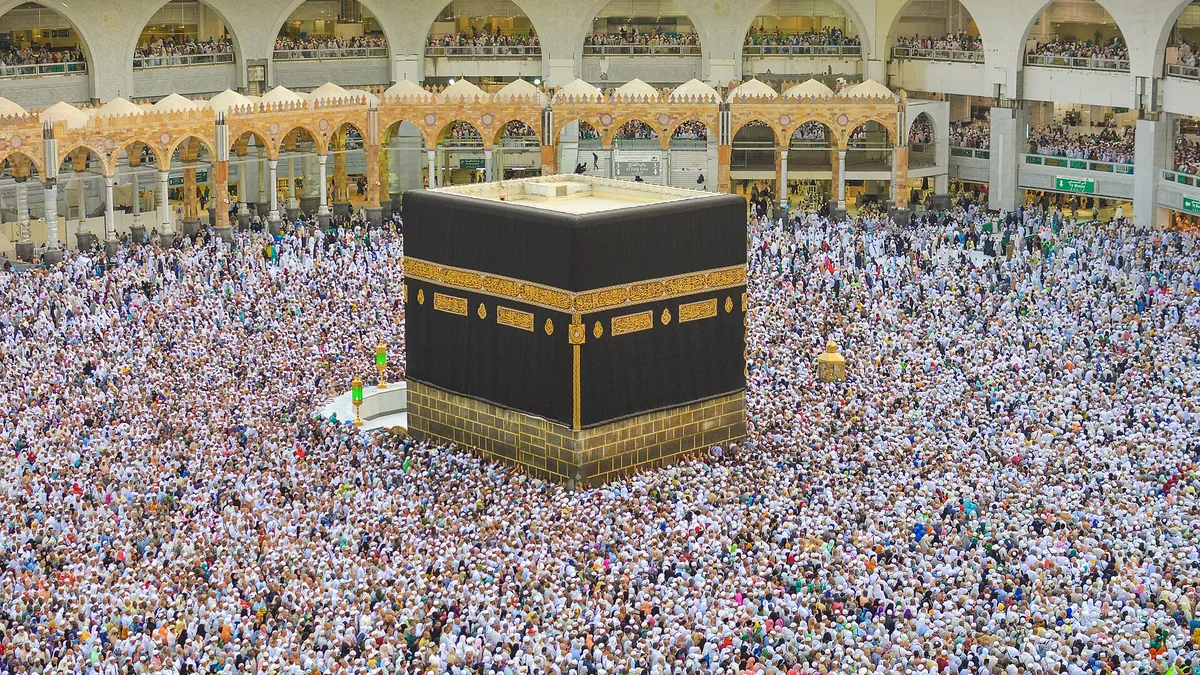
Photo sources: Photographs are credited and do not show our customers or a particular booking. Featured photo: pilgrims performing Tawaf around the Kaaba during Hajj (photographed 2018), resized and cropped for this guide; photo by Adli Wahid, CC BY-SA 4.0.